
Prospective customers usually have the same worries: What will this cost? Is my roof or land even suitable? Will the system actually hold up through a Maine winter? How disruptive is construction? What happens with the utility connection, and do I need a battery?
Finding one contractor who can manage the whole process, rather than juggling three or four separate vendors, solves most of these headaches. This guide walks through project stages, system types, and what separates a capable solar construction company from one that's just selling panels. We'll also look at how Assured Solar Energy handles these projects for Maine homes, businesses, farms, and remote properties.
Key Takeaways
- Site evaluation, energy-use analysis, and permitting planning come before any panel touches a roof.
- Solar construction companies build grid-tied, off-grid, battery-backed, commercial, agricultural, and EV-ready systems.
- Compare proposals on technical scope, warranties, documentation, and post-installation support, not just price.
- Good system design accounts for shading, snow loads, electrical capacity, and your future energy needs.
What Does a Solar Power Construction Company Do?
The terms "solar installer," "EPC provider," and "full-service solar construction company" get used interchangeably, but they aren't the same thing.
An EPC stands for engineering, procurement, and construction, though companies using that label may also handle sales, development, or electrical subcontracting. A pure installer, by contrast, may only handle physical labor once someone else has designed the system.
A full-service construction partner typically covers:
- Feasibility review and energy assessment: confirming the site can support the system you want
- Site measurement, including LIDAR scanning for roof and shading data
- PV system design, equipment selection, and structural/electrical planning
- Permitting and procurement, plus utility coordination
- Installation, inspection, commissioning, and ongoing monitoring
Why One Coordinated Partner Matters
When separate companies handle design, electrical work, and permitting, mistakes slip through the cracks at every handoff. A structural engineer's assumptions might not match what the electrician installs. A permit application might miss a requirement the utility flags later.
Assured Solar Energy's commercial installation process covers project design and engineering, permitting and compliance, equipment procurement, installation, and activation under one contract, which is the kind of scope you should be asking every prospective contractor about.
Before signing anything, confirm in writing whether your proposal includes utility interconnection paperwork, structural engineering, inspections, and permission-to-operate coordination.
Don't assume these are bundled into the installation price. SEIA's consumer guide specifically recommends asking who handles utility coordination, inspections, and permission to operate before you sign.
How a Solar Power Construction Project Works
Consultation and Feasibility
Everything starts with a look at your property: location, energy consumption, roof or land condition, shading, utility access, and goals. If you're planning an EV purchase or an addition in five years, this is the moment to mention it, since it changes how the system gets sized.
Design and Engineering
Designers develop panel layout, racking approach, inverter configuration, and (if applicable) battery capacity. Assured Solar Energy uses industry-standard design software combined with LIDAR technology to model roof geometry and shading precisely rather than estimating from satellite photos alone.
One documented system summary shows how granular this gets: 42 panels, a single inverter, a 35-degree tilt, and a 0% shade-reduction factor, producing a projected 22,907 kWh annually against the property's usage.
Permitting and Utility Approval
This stage trips people up because it's invisible labor. Local building and electrical permits, utility interconnection applications, fire-safety review for battery installations, and sometimes land-use review all need to happen before (or alongside) construction.
In Maine, Central Maine Power and Versant Power both require signed interconnection agreements before a system runs in parallel with the grid. Completion typically requires a local electrical inspector's sign-off plus the utility's own commissioning step.
Timelines vary widely. A 2025 NREL review of residential and small-commercial projects found the typical span from contract to activation ran roughly 100 to 115 business days, with about 10% of projects taking longer than nine months. Installation labor itself is often just a day or two — the approvals are what stretch the calendar.

Procurement, Installation, and Handover
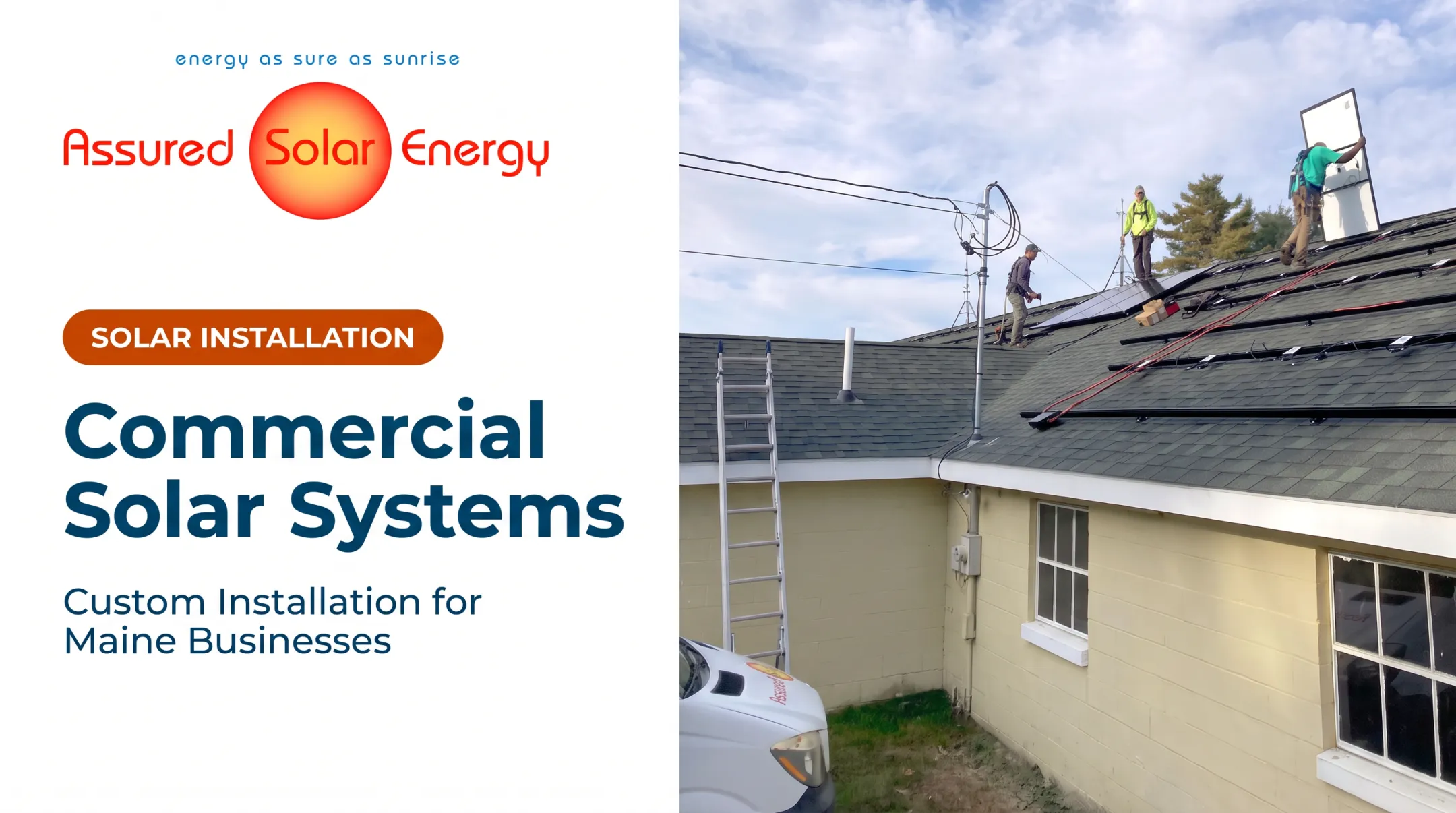
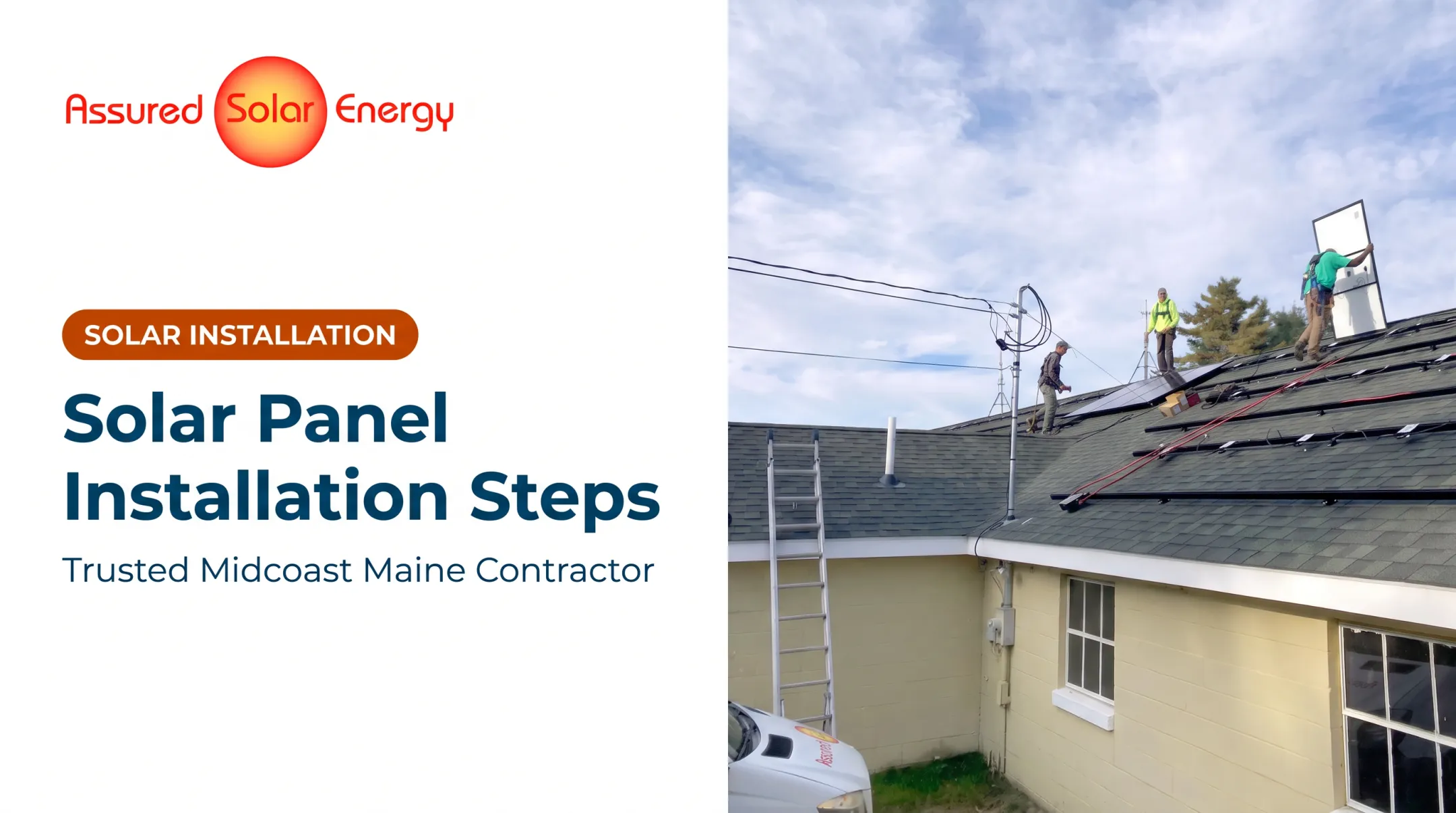
Once permits clear, the team orders equipment and coordinates delivery around roof or foundation readiness. Installation follows:
- Mounting the racking to the roof or ground structure
- Placing modules and routing wiring per code
- Installing inverters and batteries, then connecting to building electrical equipment
- Running safety checks before energizing anything
Commissioning wraps things up: inspection, utility permission to operate, system activation, monitoring setup, and customer education on warranty documents and as-built records. Client feedback on this stage tends to focus on how smooth (or chaotic) it feels. One Assured Solar Energy customer, Paul Weiss, noted that equipment was staged so efficiently the installation itself was completed in a matter of days.
Solar Construction Solutions for Different Properties
Not every property needs the same system, and a good contractor should walk you through which category you fall into.
Residential grid-tied rooftop solar suits homeowners offsetting electricity use. Roof condition, available area, shading, and your electrical panel's capacity all factor into sizing. Maine's net energy billing program credits exported solar electricity against future bills, though unused credits expire after 12 months, so oversizing a system isn't always the win it seems.
Battery-backed systems address outage resilience and evening energy use. Sizing depends on which loads you actually want to keep running: a refrigerator and a few outlets need far less capacity than central air conditioning. Capacity (kWh) and continuous power output (kW) are two different specs, and both matter.
Off-grid systems serve camps, cabins, and island properties without practical utility access. These need solar production, battery storage, and often backup generation balanced against seasonal occupancy. Assured Solar Energy's founder, Rob Taisey, grew up off the grid on Bustins Island, Maine, and the company continues to design systems for island homes and remote communities around Casco Bay.
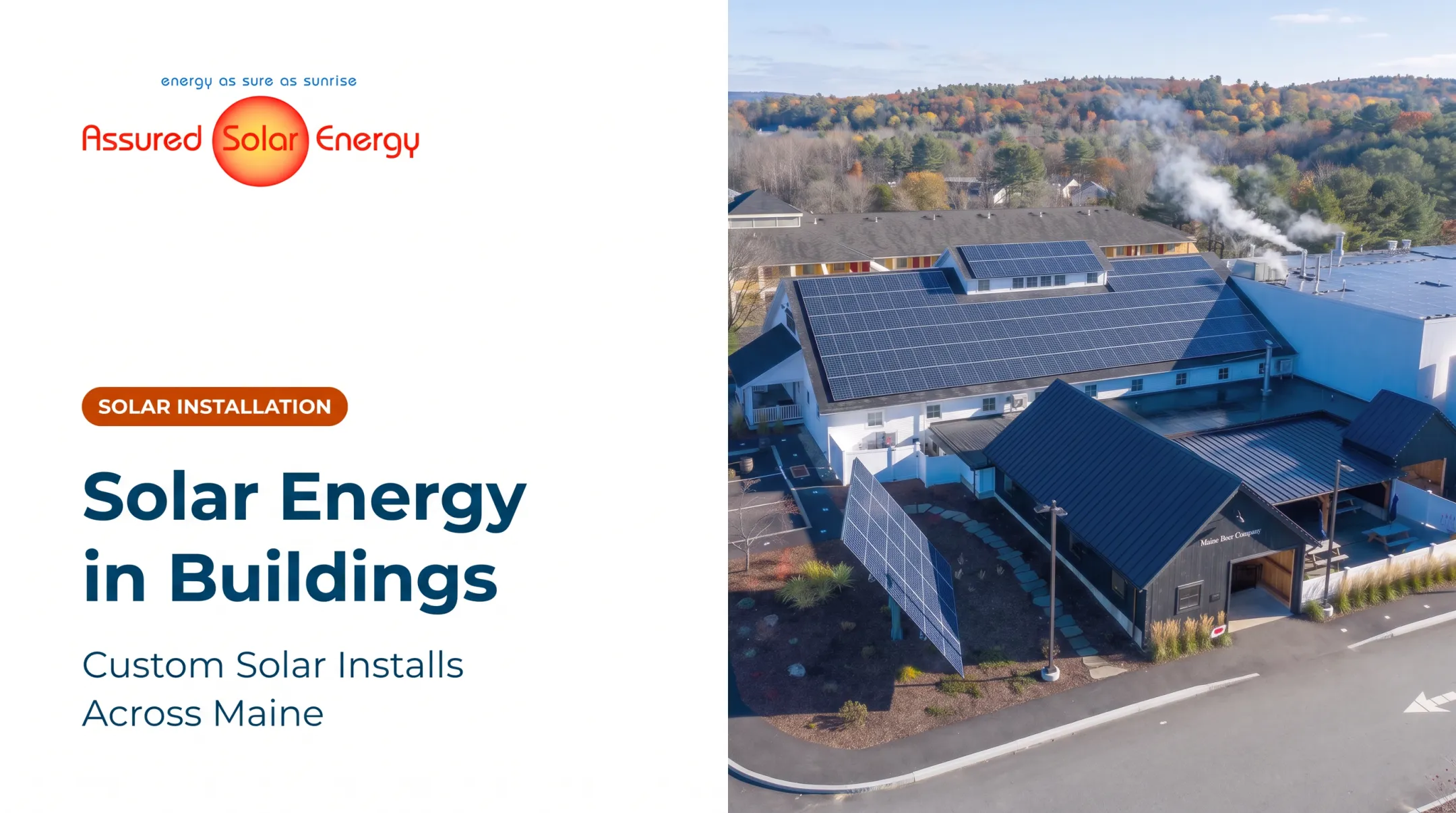
Commercial and agricultural systems deal with larger loads and demand charges, where the relevant number is often peak power draw, not just annual energy use. Assured Solar has supported projects like Two Hands Farm in Cumberland, Maine, including assistance navigating REAP grant administration for agricultural solar funding.
Solar-ready new construction means coordinating roof orientation, conduit pathways, and panel space with the builder before the roof goes on, rather than retrofitting afterward.
EV charging integration depends heavily on charger type. A standard Level 2 charger typically needs a dedicated 40-amp circuit, while DC fast charging requires three-phase input and much higher service capacity, according to the Department of Energy's charging data. Get your charger type settled before finalizing the electrical design.

How to Choose a Solar Power Construction Company
Start by matching experience to your project type. A company that's great at residential rooftops may have limited agricultural or off-grid experience. Ask directly.
Then dig into scope and documentation:
- What's handled in-house versus subcontracted? Design, permitting, utility applications, and inspections are common subcontracting points.
- What's actually in the proposal? System size, equipment brand and model, production estimates, mounting assumptions, battery specs, schedule, exclusions, and payment terms should all be spelled out.
- What warranties apply, and to what? Manufacturer warranties, workmanship coverage, roof-penetration coverage, and performance guarantees are separate things. A single panel line may carry a 25-year power warranty and a shorter product warranty, with labor coverage split by system size. Don't assume one warranty covers everything.
- What's the maintenance plan? Ask who monitors the system, who responds to alerts, and what happens if a panel or inverter fails five years in.
Verify licensing, insurance, and relevant code-compliance experience with your local permitting authority. Don't take any credential claim at face value without checking it yourself.
Assured Solar Energy's 30-year equipment and labor warranty is one example of a longer-than-typical commitment worth asking about directly, including what it excludes.
Why Work With Assured Solar Energy?
Assured Solar Energy has designed and installed photovoltaic systems across Maine since 2006, working with residential, commercial, and agricultural customers on both grid-tied and off-grid projects. The team is now a 20-plus-person operation that still focuses on hands-on, site-specific design.
Founder and President Rob Taisey brings solar experience dating back to the late 1970s, starting with solar hot-water systems around Falmouth and Yarmouth, Maine, before moving into photovoltaic array design in the early 1980s. That experience shapes the company's approach:
- LIDAR-based system design for precise shading and roof modeling
- End-to-end commercial support, from engineering and permitting through activation and compliance documentation
- A 30-year equipment and labor warranty on installations (ask Assured Solar directly for full terms and exclusions)
- Island and remote-site experience, including projects around Casco Bay

If you're a Maine homeowner, builder, business owner, farm operator, or remote-property owner weighing a solar project, a site-specific consultation is the fastest way to find out what your property can support.
Call 207-221-2916 or reach out through Assured Solar Energy's contact page to get started.
Frequently Asked Questions
What happens after 25 years of solar panels?
Panels generally keep producing electricity past 25 years, though output gradually declines. A 2024 NREL study found early degradation rates around 0.35%–0.55% annually in newer modules, but check your specific manufacturer's performance warranty for exact guarantees.
How long does it take to build a solar power system?
Design, permitting, equipment procurement, physical installation, and utility approval each take different amounts of time, and together they usually add up to several months. Weather, local jurisdiction, and utility review speed all affect the final schedule.
Is a solar power construction company only for large commercial projects?
No. Qualified companies often support residential rooftops, farms, small businesses, new construction, and remote properties, in addition to larger commercial work, depending on their capabilities and service area.
Can solar panels work during a power outage?
Standard grid-tied systems automatically shut down during outages for safety reasons. A properly designed solar-plus-battery system, by contrast, can keep selected loads running.
Do I need batteries with a grid-tied solar system?
Not necessarily. Many grid-tied systems run without storage. Batteries make sense if you want outage backup, more evening energy use, or to manage demand charges, but they add cost and complexity.
What should I ask before hiring a solar construction company?
Ask about relevant project experience, who handles design versus permitting versus installation, equipment brands, realistic schedules, warranty terms, and what ongoing monitoring or maintenance looks like. Also confirm licensing, insurance, and references.