
Townhome solar is more complicated than a typical single-family install. The roof might be shared property, maintained by an association rather than you. Available space is often tighter. And design choices, like where panels sit or how wiring runs, can affect common property or the unit next door.
This isn't a project to improvise. Incorrect work creates water intrusion, electrical hazards, poor production, stalled approvals, or warranty disputes down the road. A qualified solar, roofing, and electrical team should handle the assessment and installation.
Here's the full process: confirming ownership and permissions, assessing the roof and your energy needs, designing the system, securing approvals, installing the equipment, and finishing with inspection and utility interconnection.
Key Takeaways
- Determining who owns or controls the roof comes before any equipment decision.
- A smaller or shaded roof may support solar without covering all your electricity use.
- HOA, condo association, building-code, fire-access, and utility rules all need addressing upfront.
- Roof age, structure, orientation, and shading should drive a professional site assessment.
- Batteries aren't required for most grid-tied systems, but they add backup power and self-consumption.
Installation Guide for Solar Panels on a Townhome
A townhome solar project generally moves through six stages: ownership and rule review, site assessment, system design, approvals and permits, installation, and finally inspection with utility activation.
This is a coordinated construction and electrical project, not a weekend DIY job. Timelines swing based on your roof's condition, how quickly your association reviews applications, the permitting authority, the utility, equipment availability, and the overall project scope.
Prerequisites and Safety Considerations
Start by figuring out who owns the roof. Is it individually owned, assigned for your unit's exclusive use, or common property controlled by a condo association or HOA? Pull your deed, the declaration, bylaws, and architectural guidelines before you go any further.
Some townhome communities assign residents a unit without the resident ever owning the actual installation surface above their heads. The CAI's testimony on community association law flags this exact issue: the roof may be association-owned, insured, and maintained, which changes who gets to say yes.
If your association is involved, expect to submit:
- A formal application with equipment specifications
- Engineering documents and visual renderings
- Proof of contractor insurance
- A maintenance commitment
- An agreement covering future roof repairs and panel removal
Physical site factors matter just as much as paperwork. Your installer should assess roof age and material, remaining service life, structural capacity, slope, orientation, and shading from neighboring buildings or trees. Vents, skylights, and other penetrations all narrow usable space further.
Fire codes add another layer. The 2024 International Fire Code requires clear pathways for firefighters, typically two 36-inch-wide paths from roof edge to ridge on separate planes, plus ridge setbacks of 18 to 36 inches depending on how much of the roof the array covers. These aren't optional design preferences.
On the electrical side, confirm service-panel capacity, inverter placement, rapid-shutdown requirements, and local permitting rules before signing a contract.
Don't proceed until:
- Roof ownership and permission are documented in writing
- The roof is suitable, or a replacement is already scheduled
- Structural and electrical requirements are confirmed
- A complete, approved design exists
Tools and Parts Required
You won't need to buy tools for this one. Your installer supplies the racking, mounting hardware, panels, inverter or microinverters, wiring, disconnects, labels, and monitoring equipment.
Standard equipment includes:
- Racking and mounting hardware rated for your roof type
- Solar panels sized to your design
- String inverter or microinverters
- Disconnects and rapid-shutdown devices
- Wiring, conduit, and grounding hardware
- Production monitoring equipment
Optional, goal-dependent additions:
- Battery storage
- Consumption monitoring beyond basic production tracking
- EV-charging integration
- Backup-load controls for outage scenarios
Battery storage adds real cost. The Department of Energy's Q1 2025 benchmark model shows an 8-kW system jumping from roughly $23,600 for PV alone to $36,720 with storage added, an increase of about $13,120 based on the DOE's cost model.
That national figure is not a townhome-specific quote, but it shows the gap between grid-tied-only and battery-backed systems.
Specialized roof, electrical, testing, lifting, and commissioning equipment is required. Improvised hardware or substitutions have no place on a shared-roof project.
How to Install Solar Panels on a Townhome: Step-by-Step
- Document your property and energy needs. Gather six to twelve months of electric bills, note major loads like heating, cooling, water heating, and EV charging, and flag any upcoming changes that could affect sizing.
- Complete a professional roof and shade assessment. LIDAR-based measurements and modeling identify productive roof sections, obstructions, seasonal shading, fire-access clearances, and the realistic maximum panel layout.
- Design and review the system. This covers panel placement, racking, inverter architecture, wiring routes, monitoring, and optional battery storage, balanced against roof loading and association requirements.
- Submit your HOA or condo package and pull permits. Then coordinate with your utility for interconnection approval. An association sign-off or a building permit doesn't automatically authorize grid connection.
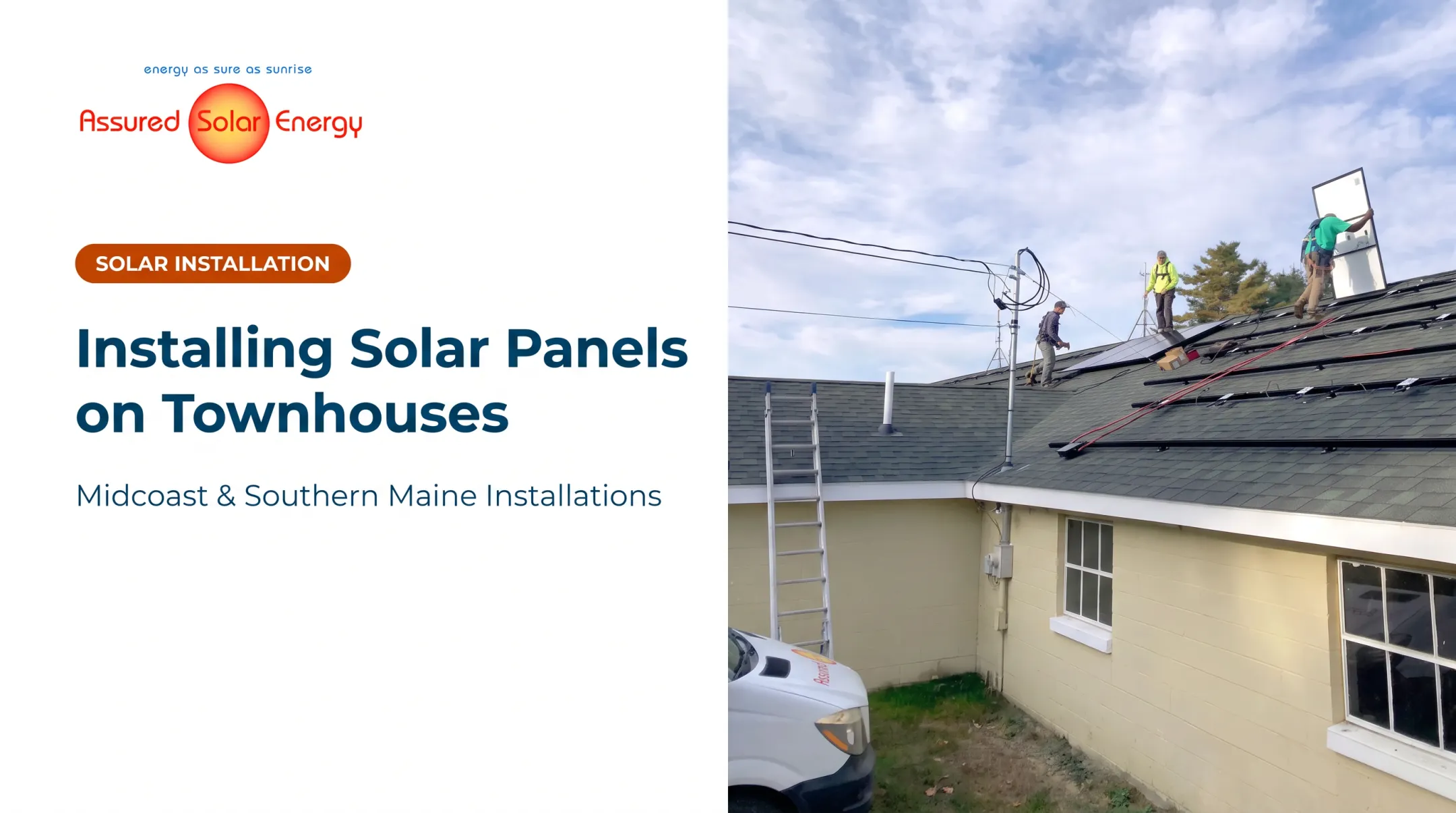
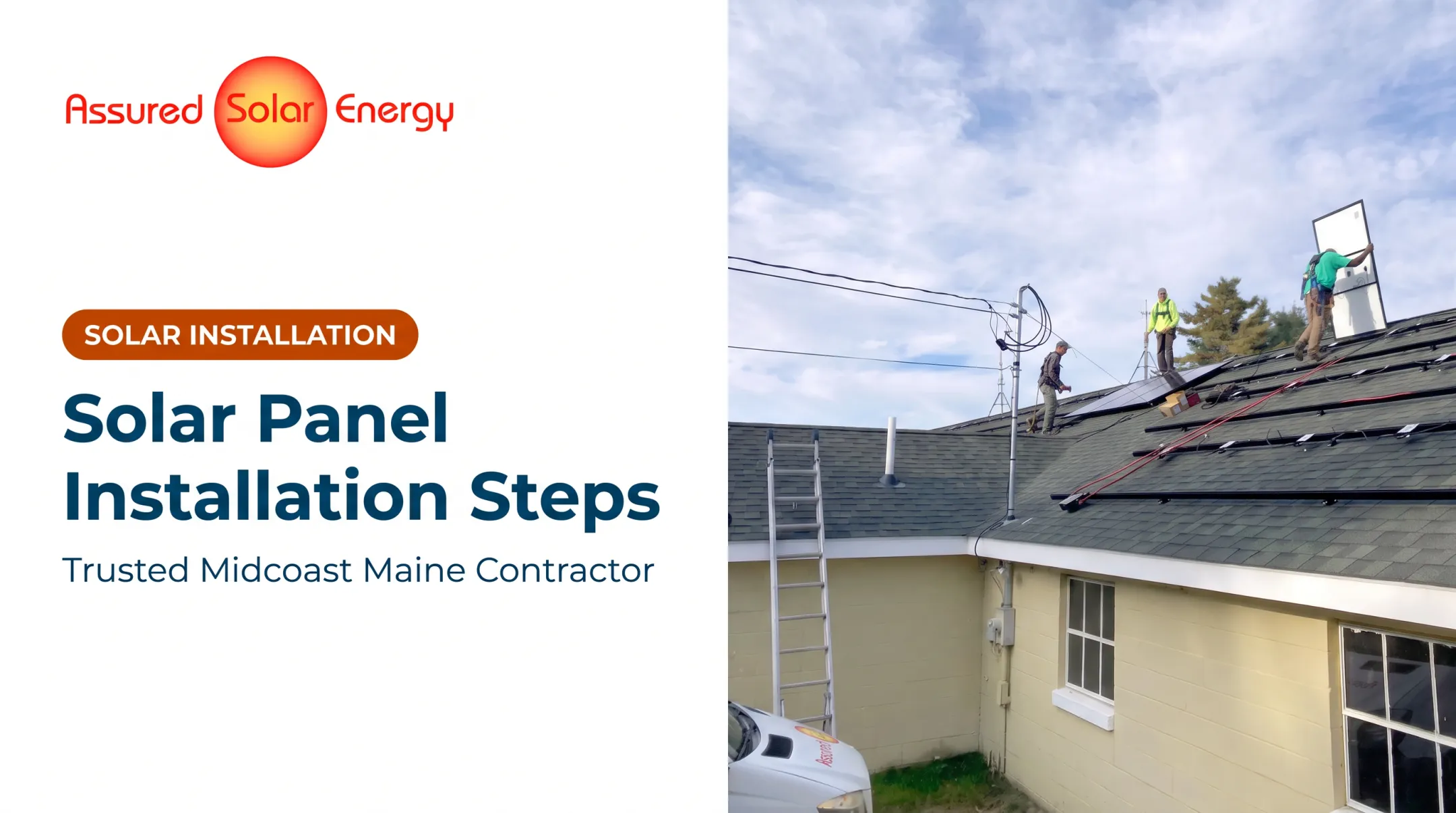
- Install and integrate the system. This includes protecting shared property, attaching racking per the approved structural design, routing wiring safely, completing grounding and shutdown provisions, and tying into your home's electrical service.
- Finish inspection, commissioning, and utility activation. You should walk away with final drawings, equipment specs, warranties, maintenance responsibilities, and emergency-shutdown instructions.

Thorough installers collect this intake detail before design work starts: roof age and condition, roof type, and whether you want grid-tied, grid-tied with battery backup, or off-grid.
Post-Installation Checks and Validation
Once panels are up, don't just assume everything's fine. Check that:
- Attachments are secure and flashing is properly waterproofed
- Cable management is neat and clearances are maintained
- Shared walls, landscaping, and common areas weren't damaged during installation
- Equipment labels and placement match the approved design
Verify electrical performance through installer testing, local inspection, inverter commissioning, and monitoring setup. Utility approval to operate is the final gate.
Compare early production against your design estimate, but give it room. Weather, season, shading, and household usage patterns all swing numbers. One documented residential design projected 1,490 kWh in January versus 2,410 kWh in July for the same system, a reminder that seasonal variation is normal, not a red flag.
Before you consider the project done, confirm in writing who handles monitoring, repairs, insurance notifications, snow or debris removal, roof leaks, and panel removal if the roof needs work later.
Common Installation Problems and Fixes
Issue 1: The HOA or Association Rejects or Delays the Project
Problem: You submit an incomplete plan, approach the wrong decision-maker, or assume state solar-access laws eliminate every design requirement.
Likely cause: Unclear roof ownership, skipped governing-document review, thin visual or structural documentation, or a design that clashes with reasonable safety or appearance rules.
State protections vary widely:
- California (Civil Code 714): $1,000 cost threshold and 10% efficiency test; applications deemed approved after 45 days of silence
- Colorado: Caps cost increases and efficiency losses at 10%; boards get 60 days to respond
- Florida: May require south-facing placement within 45 degrees east or west if performance isn't impaired

None of these laws erase ownership or maintenance questions.
Fix:
- Identify the actual decision-maker early
- Request the association's current process in writing
- Submit a complete professional package the first time
- Confirm state and local requirements with a qualified legal or permitting resource
Issue 2: The System Can't Meet Your Electricity Demand
Problem: The roof technically fits panels, but shade, orientation, setbacks, or obstructions cap annual production below what you need.
Likely cause: Sizing based on roof square footage alone instead of usable area, actual consumption, and seasonal output.
Fix:
- Size the system off real utility data, not roof size
- Use module-level power electronics if partial shading is unavoidable
- Improve household efficiency where possible
- Consider community solar if the roof can't meet demand
Issue 3: The Roof Needs Repair After Panels Go Up
Problem: Panels have to come off and go back on, adding cost, scheduling headaches, and another round of association coordination.
Likely cause: Roof age or shared-maintenance planning wasn't reviewed before the contract was signed.
Fix:
- Replace or repair the roof first whenever practical
- Document who handles future removal and reinstallation
- Confirm in writing how the installer's warranty interacts with roofing and association obligations before work starts
Pro Tips for Townhome Solar Installation
Ask any installer you're considering these questions directly:
- How do you handle shared roofs and HOA or condo applications?
- Who protects common-area property during installation?
- Who manages utility interconnection paperwork?
- What happens if the roof needs work after installation?
- What does post-installation service look like?
When comparing proposals, use the same assumptions across every bid: usable roof area, estimated annual production, shading analysis, expected consumption, equipment ownership, financing terms, warranty length, and what's excluded.

Pick an installer who manages the full process: design, engineering, permits, inspections, and utility activation, rather than leaving you to coordinate it all. Assured Solar Energy, a Maine-based photovoltaic design and installation company, is one example of a contractor offering LIDAR-based system design, grid-tied and battery-backed options, and a 30-year equipment and labor warranty. Terms and project eligibility should always be verified directly with any installer you're considering.
Plan for appearance and long-term access too. Choose a layout that doesn't block vents or required pathways. Keep every drawing, approval, serial number, and warranty document on file. A professional assessment matters even more when:
- The roof is shared or association-controlled
- The home sits in a condominium structure
- The roof is older or shows significant shading
- You want batteries, backup power, or EV charging built in from the start
Conclusion
Townhome solar is often possible, but the real answer hinges on legal roof control, physical suitability, available sunlight, your system goals, and local association, utility, and building approvals.
Start with documents and a professional site assessment, not equipment shopping. That order protects your roof, improves system performance, and cuts down on approval delays and rework later.
Frequently Asked Questions
How big of a solar system do I need to run a townhome?
System size depends on annual electricity use, roof space, orientation, shading, and major loads like air conditioning or EV charging. Start with your utility bills and get a professional production estimate before committing to a size.
Can I run air conditioning in a townhome with solar panels?
Solar can help power air conditioning while the system is producing, but actual coverage depends on your AC unit's demand, the array's output, and other household loads. Batteries are necessary if you want meaningful backup during an outage.
Do I need HOA or condominium approval to install solar panels on a townhome?
Requirements vary by governing documents and state law. Identify the roof owner, follow your association's formal application process, and confirm local requirements before signing an installation contract.
Can solar panels be installed if my townhome roof is shared?
Shared or common roofs often require association authorization, a building-wide plan, or an alternative like community solar. A qualified installer needs to verify ownership, structural responsibility, access, and maintenance obligations first.
Do townhome solar panels need batteries?
No. Grid-tied solar reduces your bill without batteries. Batteries add backup power during outages and increase how much of your own solar generation you use, which may be worth the added cost depending on your goals.