
Many farm operations face a tight margin problem. Energy costs keep climbing while land stays finite. Residential electricity prices have risen roughly 3% annually over the past decade, squeezing operations that depend on walk-in coolers, irrigation pumps, and processing equipment.
Agrivoltaics, also called dual-use solar, offers a different path than converting productive farmland into a conventional utility-scale solar field. Instead of choosing between crops and kilowatts, the array gets engineered around the agriculture already happening on site.
This guide answers the practical questions that come up before committing: what dual-use solar actually looks like, what it costs, how many panels fit on an acre, how systems get designed around farm operations, and how to tell if your site is a good candidate.
Key Takeaways
- Agrivoltaics can support crops, grazing, pollinator habitat, and farm income, though results depend on climate and crop choice
- Row spacing, panel height, drainage, and equipment lanes need planning before construction starts
- Panel counts and costs hinge on your power target, not acreage alone
- Interconnection, permitting, incentives, insurance, and decommissioning terms all affect project viability
- Soil protection during construction determines whether the land performs well for farming afterward
What Is Agrivoltaics and How Can Farms Use Solar?
Agrivoltaics is the co-location of photovoltaic solar generation with crop production, livestock grazing, pollinator habitat, or other farm activity on the same site. The defining feature, per the U.S. Department of Energy, is that agricultural use continues underneath or between the panels rather than stopping when construction ends.
That's a sharp contrast to a conventional utility-scale solar project, where farmland typically exits production entirely and gets covered with low, densely packed panel rows.
Three Main Approaches to Dual-Use Solar
Farms pursuing agrivoltaics generally choose one of three models:
- Crops beneath or between elevated panels - row spacing, irrigation, and harvest equipment access get designed around the light levels the crop actually needs
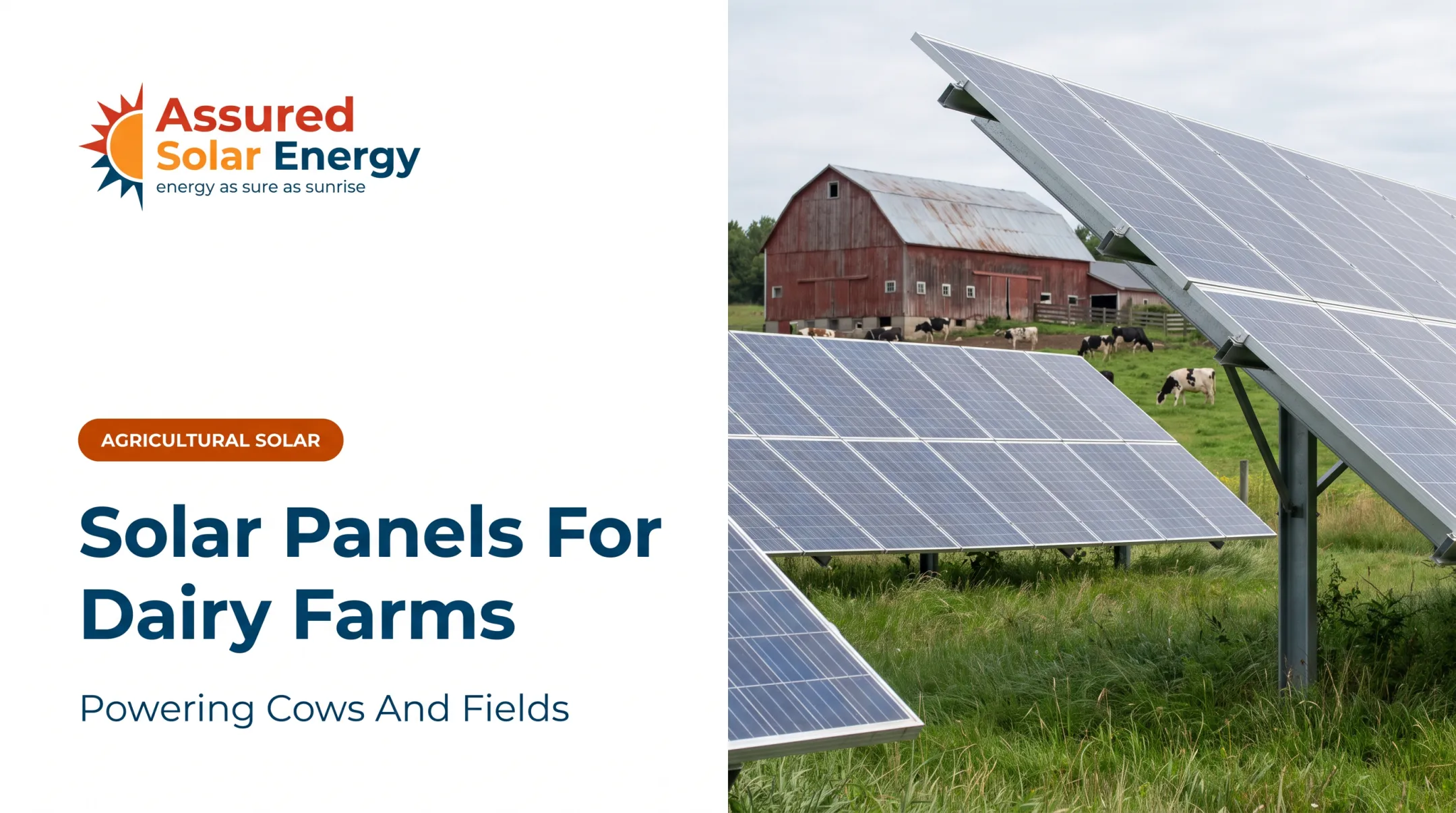
- Livestock grazing under or around arrays - fencing, protected wiring, panel height, and vegetation management account for animal behavior
- Pollinator habitat or native forage - low-growing native plants get seeded around and beneath panels where height and maintenance needs don't conflict with the equipment
How Dual-Use Solar Compares With Other Farm Solar Options
Agrivoltaics isn't the only way a farm can use solar. Other common setups include:
- Rooftop systems on barns or outbuildings
- Ground-mounted arrays on nonproductive corners of a property
- Dedicated systems powering irrigation or pump stations
- Leasing land outright to a solar developer, which removes it from agricultural use
The electricity generated can offset farm loads such as refrigeration and equipment, charge batteries for remote operations, or feed back to the grid, depending on utility rules and project design. Two Hands Farm in Cumberland, Maine, is one example: the operation grows vegetables and raises chickens and dairy goats, and pursued solar specifically to power its walk-in coolers, farm stand, and equipment.
A Research Example: Crops Growing Under Panels in the Desert
At the Biosphere 2 Agrivoltaics Learning Lab near Tucson, Arizona, researchers compared crops grown under elevated panels with the same crops grown in open sun. Panels sat 3.3 meters above the soil at their lowest point, tilted 32 degrees, spaced about a meter apart.
The results, published in a Nature Sustainability study, varied by crop:
- Chiltepin pepper production was three times greater under the panels
- Cherry tomato production was twice as great
- Jalapeno production stayed nearly identical between treatments
That's a desert-climate result tied to a specific array design, not a universal yield forecast. A humid Midwest farm or a cloudy coastal site would likely see different outcomes.

What Are the Benefits and Trade-Offs of Solar Panels on Farms?
Dual-use solar can pay off in several ways, but none of it is guaranteed. Results vary by crop, climate, and design.
Financial Benefits
- Reduced electricity purchases - Lower or eliminate bills for coolers, irrigation, and equipment over a 25-plus year lifespan
- More predictable energy costs - Hedge against rates that have climbed roughly 3% annually over the past decade
- Lease or service income - Earn developer lease payments or vegetation-management fees from solar grazing
- Renewable Energy Certificates - Sell, trade, or barter RECs for extra revenue
Cornell's research on New York solar grazing found sheep farms earning roughly $300 to $500 per acre annually in vegetation-management contracts, a service fee rather than a land-lease rate or guaranteed profit.
Agricultural and Water Benefits
Panels create a different microclimate underneath them. In the Arizona trial, daytime air temperature under the array averaged about 1.2°C (roughly 2°F) cooler.
Jalapeño plants showed 65% less water loss through transpiration despite equal irrigation. Soil moisture also stayed measurably higher between irrigation cycles.
These are site-specific, irrigated-trial results, not a universal irrigation-savings figure. Shade tolerance differs by crop. Some benefit from it; others don't.
Environmental and Land-Use Benefits
- Supports pollinator habitat and native plantings instead of turf grass
- Can reduce mowing and herbicide needs over time
- Keeps land in agricultural use rather than converting it entirely to energy production
- Offers soil-restoration opportunities when paired with cover crops or rotational grazing
Trade-Offs and Risks
Elevated racking and wider row spacing cost more to build, reduce panel density per acre, and complicate maintenance. Other risks worth weighing:
- Soil compaction during construction
- Interference between tractors, harvesters, and support structures
- Yield loss for shade-sensitive crops
- Conflicts with spraying, dust, or prescribed burning
- Flooding, snow load, or livestock contact with wiring
- Insurance and liability questions tied to a new structure on the property
Ownership, Leasing, or Third-Party Development
Farms generally choose between three models:
- Own the system - Capture all savings and incentives, with full maintenance responsibility
- Lease land to a developer - Receive fixed payments, but give up agricultural control of that acreage
- Hybrid arrangement - Keep land productive through a solar-grazing or similar service contract
Each option shifts risk, maintenance responsibility, and financial upside differently. Discuss the choice with an agricultural lender before signing anything.
How Should an Agrivoltaic System Be Designed Around Farm Operations?
Good agrivoltaic design starts with the farm, not the panel count. Before any layout gets drawn, map out crop rows, livestock movement, irrigation and drainage lines, access roads, buildings, utilities, wetlands, and setbacks. Then mark the areas that need to stay free of infrastructure entirely.
Panel Height and Row Spacing
Height and spacing decisions drive almost everything else about cost and usability.
- Elevated panels let equipment, workers, or livestock pass beneath, but need more structural material and often stronger foundations
- Wider row spacing improves light distribution and access for machinery, but fits fewer panels on the same footprint
NREL's Five Cs research found no single ideal height works everywhere. Vegetable growers in its InSPIRE trials generally needed at least 6 feet of torque-tube clearance, with many preferring 8 feet or higher. Grazing setups can work with much lower clearance. One Oregon sheep trial used panels just 3.6 feet off the ground.

Choosing Crops and Vegetation
Crop height, shade tolerance, seasonal sunlight needs, root depth, irrigation method, harvest equipment, and market value all factor into what will actually thrive under an array. This isn't a decision to make alone. Loop in an agronomist or extension professional before finalizing crop selection.
Integrating Livestock
Grazing animals need:
- Fencing that keeps them clear of electrical equipment
- Protected or elevated wiring, out of reach of curious livestock
- Reliable water access and shelter
- A grazing rotation plan and veterinary access routes
Protecting Soil During Construction
Construction is often the riskiest phase for long-term soil health. Protect the ground with:
- Low-impact site preparation
- Work scheduled around planting and harvest windows
- Minimal grading
- Restoration of compacted areas afterward
Documenting soil conditions before construction begins gives you a baseline to compare against later.
Electrical and Operational Details
Cable routing, inverter and battery placement, panel cleaning, snow and ice management, and fire access paths all need separation from agricultural machinery and chemical storage.
A farm project Assured Solar Energy designed, for example, routed wiring through a 12-combiner-pole zone with careful string sizing to keep cabling clear of equipment lanes. It's the kind of detail that's easy to overlook until a tractor clips a conduit.
How Much Do Solar Panels Cost for Agriculture and How Many Fit on an Acre?
There's no honest single-number answer to "what does an acre of solar cost on a farm." Total project cost includes:
- Panels, inverters, racking, and foundations
- Elevated structures where crops or livestock need clearance
- Wiring, transformers, and batteries if included
- Site preparation, fencing, and access lanes
- Interconnection, engineering, and permitting
- Labor, ongoing maintenance, insurance, and eventual decommissioning
What Drives Panel Count Per Acre
Acreage alone tells you almost nothing about how many panels will fit. The real variables are:
- Panel dimensions and wattage
- Tilt angle and orientation
- Row-to-row spacing and panel height
- Equipment lanes and required setbacks
- Terrain, drainage, and shade requirements
- The width and turning radius of farm machinery that needs to pass through
A Real-World Cost Benchmark
NREL's 2020 cost analysis modeled a 500-kWdc base case and found elevating panels for dual use added roughly $0.07 to $0.80 per watt over a conventional bare-ground system, with crop-support structures carrying the highest premium.
A follow-up 2024 NREL feasibility model for Jackson County, Illinois, put numbers on specific configurations:
| Configuration | Height | Modeled Cost |
|---|---|---|
| Conventional-height tracker (baseline) | 4.6 ft | $1.97/W |
| Raised one-axis tracker | 8.2 ft | $2.40/W |
| Raised fixed array | 8.2 ft | $2.66/W |
| Vertical bifacial array | 6.4 ft | $2.09/W |
Raising that tracker added about $0.43 per watt, roughly 22% more. That's specific to this model, not a universal rule of thumb.

Farm projects often sit far below those utility-scale benchmarks. A system Assured Solar Energy designed at 15.54 kW DC produces about 22,907 kWh annually. Built for coolers, a farm stand, and equipment, it shows how arrays can be sized to actual load rather than available acreage.
Running the Numbers
Compare expected savings or revenue against capital cost, financing terms, and tax treatment. Federal clean-electricity tax credits currently offer a base 6% rate, rising to 30% when prevailing-wage and apprenticeship requirements are met, though new deadlines apply to projects starting construction after mid-2026.
USDA's REAP grant program has paused new grant applications for FY2026, though guaranteed loans continue. Two Hands Farm secured its system through REAP before the pause, with help navigating the grant paperwork.
Incentive timing shifts often, so verify current status with a tax professional before budgeting around it.
How Can a Farmer Decide Whether Agrivoltaics Is Suitable?
Before investing time or money, run your farm through a basic screen.
Site and Operations Checklist
- Solar resource and available acreage, including nonproductive corners
- Current and planned crops or livestock
- Farm equipment dimensions and turning radius
- Electrical demand from coolers, pumps, and buildings
- Drainage, flooding history, snow load, and soil quality
- Distance to the nearest interconnection point
- Local land-use and zoning rules
Confirm Ownership and Control
Check lender consent if the property is mortgaged, agricultural lease terms, easements, conservation restrictions, and any tenant-farmer rights. Clarify insurance coverage, who's liable for crop or equipment damage, and what end-of-life restoration the project requires.
A Practical Feasibility Process
- Gather utility bills and farm-load data to establish a real energy baseline
- Complete a site survey covering soil, drainage, and solar access
- Model production against agricultural access, not just maximum output
- Consult agricultural and electrical professionals before finalizing a design
- Request a preliminary interconnection review from the utility
- Compare ownership versus lease options against your farm's cash flow
- Validate the design against seasonal workflows, since planting, harvest, and calving don't pause for construction
Questions to Ask an Installer or Developer
- What agricultural project experience do you have?
- How is the structural design validated for wind and snow load?
- What warranties cover equipment, labor, and crop or infrastructure damage?
- How is monitoring and maintenance handled long-term?
- What's the plan for decommissioning and site restoration?
A solar design-and-installation company with agricultural experience can help answer these before you commit. Assured Solar Energy, which has served Maine farms since 2006, uses LIDAR-based design to map site-specific light exposure, then coordinates engineering and permitting while comparing grid-tied, off-grid, and battery-supported options for the property. That kind of upfront assessment turns a feasibility question into a workable design, rather than a guess.
What Happens During Installation and Long-Term Farm Management?
A dual-use solar project typically follows a defined sequence:
- Initial consultation and energy or agricultural needs assessment
- Site survey and conceptual layout
- Crop or grazing compatibility review
- Financial analysis and permitting
- Utility interconnection and engineering
- Procurement and construction
- Inspections, commissioning, and performance monitoring
Assured Solar Energy follows a similar four-stage process for its projects: initial contact, customized system design, approval and scheduling, and professional installation. Timing is adapted for agricultural sites where coolers, equipment, and crop or livestock schedules all factor in.
Protecting Farm Operations During Construction
- Set seasonal work windows around planting and harvest
- Define haul routes that avoid active fields
- Limit soil disturbance and grading
- Maintain access to fields and livestock throughout
- Document preconstruction conditions as a baseline
- Establish a clear process for handling unforeseen damage
Ongoing Management
Once the system is live, both the farm and the array need regular attention:
- Vegetation control and panel cleaning
- Snow, storm, and seasonal inspections
- Inverter and battery servicing
- Cable and fence checks
- Crop or grazing monitoring alongside soil-health observations
Measuring Success on Both Sides
Track solar production and system uptime, but also watch crop yield, irrigation use, soil condition, livestock welfare, habitat establishment, and operating costs. A system that hits its generation target but damages soil or disrupts harvest access hasn't actually succeeded.

If the crop, climate, or operating model is untested on your farm, start with a feasibility study or a small demonstration area first. A design built for an Arizona desert trial or an Oregon sheep pasture won't necessarily transfer to a Maine hayfield. Test it at a scale you can afford to adjust.
Frequently Asked Questions
How much do solar panels cost for agriculture?
Costs depend on system size, racking height, row spacing, electrical infrastructure, site work, storage, interconnection, labor, and available incentives. Get a site-specific quote and check current incentive programs before budgeting.
How many solar panels fit on 1 acre?
Acreage alone doesn't answer this. Panel dimensions, wattage, tilt, setbacks, equipment lanes, elevated structures, and agricultural access all determine the final count on any given site.
Which solar panel is best for agriculture?
There's no universal best panel. The right choice depends on your energy target, available area, structural layout, shading, weather exposure, warranty terms, and what your installer supports.
Can solar panels and farming work together?
Yes, this is what agrivoltaics does. Success requires compatible crops or livestock, deliberate spacing and height, protected electrical equipment, and a design that preserves essential farm operations.
What crops can grow under solar panels?
Suitability varies by climate, a crop's light requirements, panel height, and irrigation method. Check local agronomic research, extension guidance, and site-specific trials before choosing a crop.
What should farmers consider before installing agrivoltaic solar?
Weigh farm workflow, land ownership, soil and drainage, interconnection, permitting, and incentives alongside construction impacts, insurance, maintenance, agricultural output, and decommissioning. Treat these factors together, not in isolation.