
Electricity rates have climbed roughly 3% a year over the past decade, squeezing both landlords who pay common-area bills and tenants covering their own units. Add grid outages, sustainability mandates, and residents who now ask about green features before signing a lease, and multifamily solar has moved from niche to practical.
The right setup depends on who owns the building, how it's metered, what the roof can handle, and what your utility allows. This guide walks through the main paths: rooftop arrays for shared loads, solar paired with battery storage, community solar subscriptions, and portable options for individual renters.
Key Takeaways
- Solar savings can flow to owners, tenants, common areas, or some combination, depending on how the project is structured
- Rooftop PV, storage, community solar, and portable panels solve different problems, not interchangeable versions of the same thing
- Roof condition, electrical setup, and local utility rules determine feasibility before cost even enters the conversation
- Incentive programs vary by state and ownership structure, so confirm current rules before committing
What Solar Options Mean for Apartment Buildings
"Apartment solar" covers any system or arrangement that generates, stores, allocates, or supplies renewable electricity to a multifamily property. That's a broader definition than most people expect.
There are two different models at play:
- On-site systems: panels physically installed on the building, feeding power into its own electrical infrastructure
- Off-site participation: the building or its residents subscribe to a solar project elsewhere and receive bill credits instead of electrons
Several parties typically get involved: the property owner, tenants, the property manager, the utility, a lender or financing partner, the installer, and local permitting officials. Getting all of them aligned matters more in multifamily buildings than in a single-family home project.
Metering Shapes Who Benefits
| Metering setup | Who typically benefits |
|---|---|
| Master-metered, owner pays all utilities | Owner captures savings directly |
| Individually metered units + separate common-area meter | Benefits can be split or directed to one group |
| Shared or virtual allocation | One array supports multiple accounts |
One detail trips up a lot of property owners: solar panels alone don't keep the lights on during a blackout. A standard grid-tied system shuts off automatically when the grid goes down, a safety requirement for utility workers.
Keeping power flowing during an outage requires a properly designed battery and inverter setup, according to the Department of Energy's resilience guidance. Panels by themselves aren't a backup plan.
Solar Options for Apartment Buildings
There isn't a single "best" system for multifamily properties. The right fit depends on roof condition, shared electrical loads, ownership structure, and what your state or utility actually permits.
Rooftop Solar for Common Areas or Building Loads
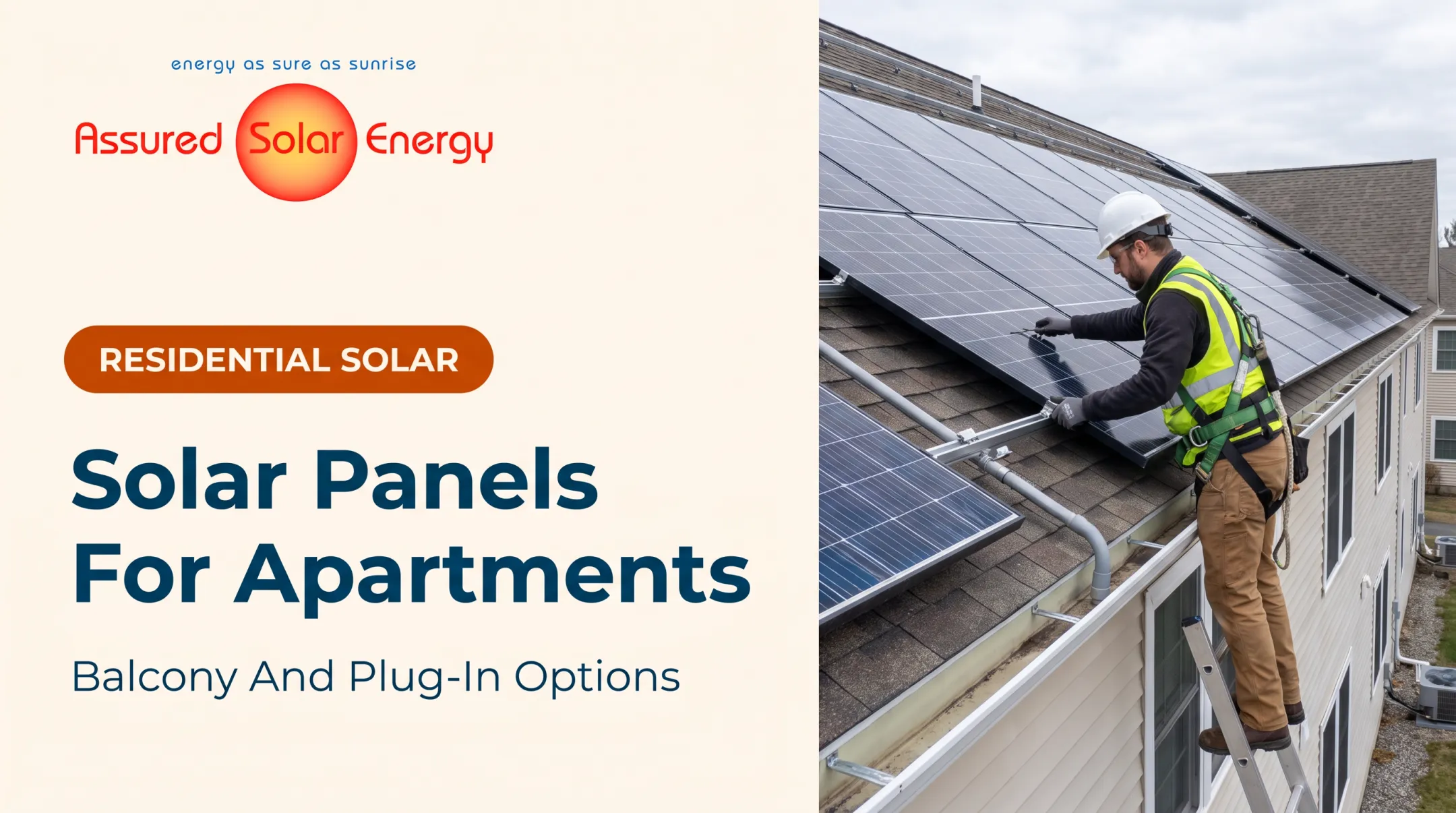
A rooftop array can offset electricity used by hallway lighting, elevators, laundry rooms, shared HVAC equipment, and leasing offices. This is usually the most straightforward entry point because it doesn't require touching individual tenant accounts.
Before moving forward, resolve a few questions:
- Who owns the array, and whose meter receives the generated power?
- Does surplus electricity earn a utility credit, and at what rate?
- How will the owner document and report the savings?
NREL's REopt study modeled a hypothetical affordable multifamily property in Providence with 50,000 kWh of annual common-area load. A 42 kW rooftop system covered 95% of that load and produced estimated life-cycle savings of $229,505.

The limitations are real, though: shading, a roof nearing replacement age, limited structural capacity, or simply not enough usable square footage can all shrink or eliminate the opportunity.
Solar-Plus-Storage for Savings and Resilience
Batteries store excess solar generation for use after sunset or during a grid interruption. In the same NREL scenario, a 6 kW / 41 kWh battery paired with the 42 kW system was designed to support critical loads through a 48-hour outage, with 75% of common-area load tagged as essential.
Storage makes the most sense when:
- Evening electricity use is high relative to daytime solar production
- The utility charges demand fees based on peak 10–20 minute usage intervals
- Specific building systems (life-safety equipment, emergency lighting) need guaranteed backup
Storage adds real complexity, however. Fire codes restrict where batteries can sit inside a building, and indoor systems generally can't occupy sleeping units or other habitable spaces under the 2024 International Fire Code. Battery chemistry, enclosure type, and local sprinkler protection all factor into required clearances, so this isn't a DIY decision. Get a licensed electrical contractor and fire-code review involved early.
Storage doesn't always improve the financial return. NREL's modeled case showed net present value dropping from $146,525 with PV alone to $114,036 once storage was added. Resilience and maximum ROI aren't the same goal.
Shared, Community, or Virtual Solar Participation
If the roof is unsuitable, shaded, under a historic-preservation restriction, or the building simply can't justify construction capital, a community solar subscription lets residents or the property buy into an off-site project instead.
Berkeley Lab's 2024 study found that community solar adopters are about 6.1 times more likely to live in multifamily buildings than rooftop-solar adopters — though that reflects an 11-state sample, not a national guarantee.
Things to check before subscribing:
- Whether the program is even available in your state (roughly 44 states or localities have active projects)
- Subscription fees versus the credit value: these are separate line items, not a net number
- What happens to the subscription if a tenant moves out
- The provider's financial stability and cancellation terms
Portable Solar and Backup Systems for Individual Renters
For renters with no path to a building-level system, small portable panels paired with a power station can run a laptop, charge phones, or keep a mini-fridge going during a short outage. Output is genuinely limited. Utah's 2025 law caps qualifying plug-in solar devices at 1,200 watts, which gives a sense of scale rather than a national standard.
Before setting anything up:
- Get written landlord or building approval before placing equipment on a balcony, window, or shared outdoor space
- Confirm the device carries UL certification and meets current electrical code
- Keep battery packs away from heat sources — lithium-ion battery recalls tied to overheating are not hypothetical
Portable gear is tenant-owned and movable, which is its advantage and its ceiling. It won't touch shared building loads the way a permitted rooftop array can.
How to Choose the Right Solar Option
Start with the outcome you actually want. Lower common-area bills? Cut tenant costs? Outage resilience? Hit a sustainability target? These goals point toward different systems.
Assess the Property and Energy Profile
Pull 12 months of utility bills and look at:
- Common-area consumption versus what tenants pay individually
- Any demand charges tied to peak usage
- Roof age, orientation, shading, and remaining structural capacity
A professional site assessment, ideally including a LIDAR-based roof model, catches issues a bill review can't. Assured Solar Energy uses LIDAR scanning and modeling software during its design process to flag shading and structural constraints before a proposal goes out.

Compare Ownership and Financing Models
Purchase, loan, lease, power-purchase agreements, and community-solar subscriptions all carry different tax treatment and risk profiles. Before picking one, confirm:
- Who claims the federal tax credit and owns the renewable energy attributes
- Who handles maintenance over the system's life
- What happens if the property is sold or refinanced
Maine's Net Energy Billing program, for example, credits exported solar electricity at a straight 1 kWh-to-1 kWh ratio on the utility account, a detail that changes the payback math for grid-tied systems in that state. Rules like this vary widely, so check your own utility's current policy rather than assuming it matches.
Plan How Tenants Will Benefit
Savings can offset owner-paid common-area costs, fund direct tenant bill credits, enroll residents in a shared solar program, or get reinvested into building upgrades. Whichever path you choose, confirm it complies with local landlord-tenant, utility-billing, and affordable-housing rules before promising anything to residents.
Confirm the Project Team and Scope
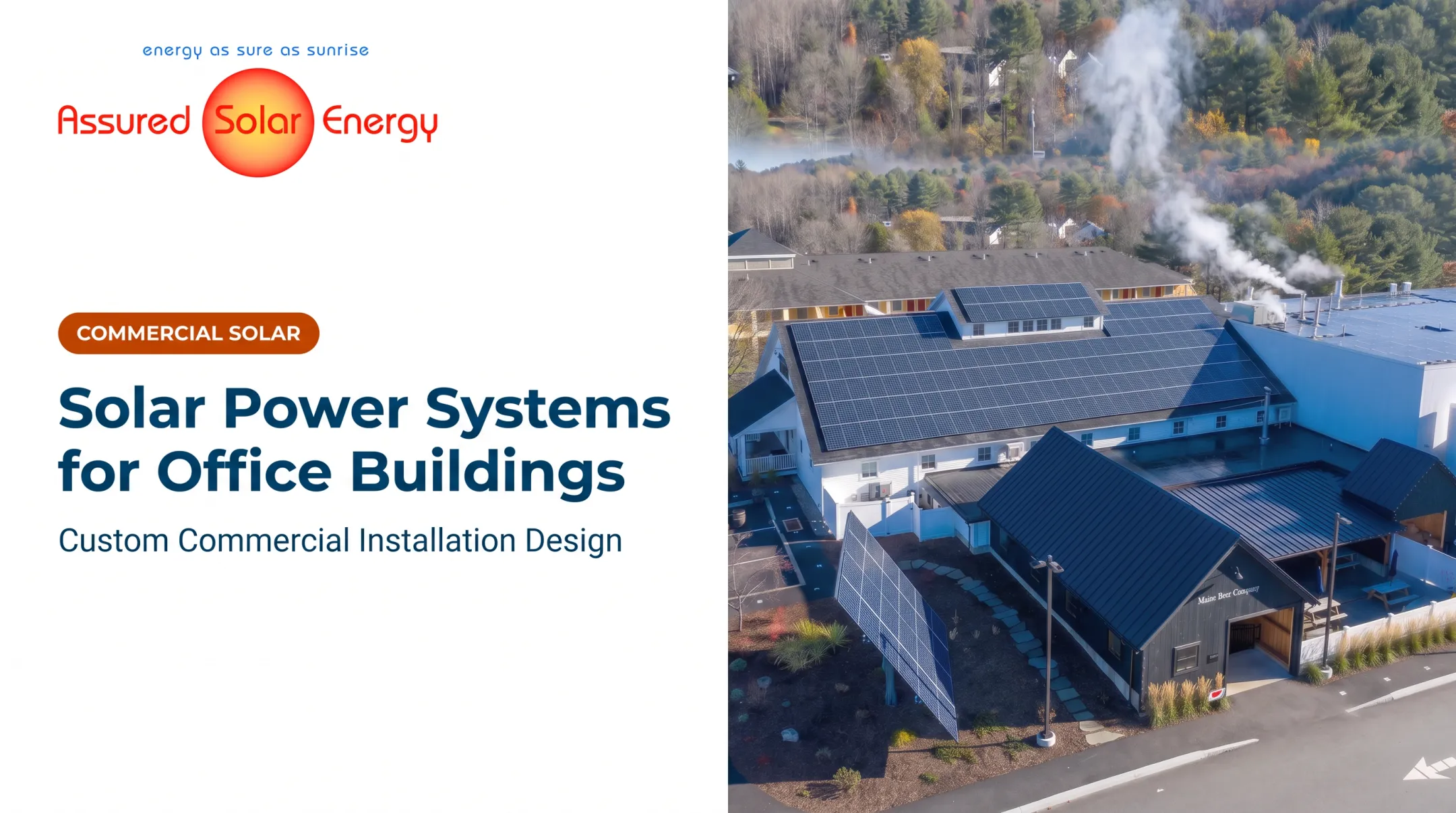
Compare proposals on production modeling, equipment warranties, monitoring, permitting support, and projected cash flow, not just the sticker price per panel. Assured Solar Energy's commercial process covers design, engineering, permitting, procurement, installation, activation, and compliance support, including staying current on federal guidelines for tax-credit planning.
That scope is a practical reference for Maine commercial property owners weighing these questions.
What to Check Before Finalizing a Solar Plan
These oversights delay apartment solar projects more than anything else:
- Don't assume the roof qualifies. Structural capacity, snow load, fire-pathway setbacks, and equipment placement all need engineering sign-off, not a visual estimate.
- Don't skip the legal and electrical review. Meter configuration, interconnection rules, condominium or co-op board approval, and lease terms all affect what's even possible.
- Don't evaluate on headline savings alone. Model panel degradation (commonly around 0.5% annually), insurance costs, battery replacement timelines, and the possibility that net-metering rules change before the system is paid off.
- Get ownership and maintenance terms in writing. Include what happens to warranties and responsibilities if the building changes hands.
- Verify every claim with current sources. Confirm details with your utility, state energy office, local permitting authority, and a licensed solar contractor, since incentive rules shift from year to year.

Conclusion
Apartment buildings have more solar paths available than most owners realize: rooftop arrays for common areas, storage for resilience, community solar for buildings that can't host panels, and portable systems for individual renters filling gaps on their own.
The right choice depends on your roof, your meters, your ownership structure, and what your tenants actually need, not on which system has the most panels or the newest equipment.
The practical next step is straightforward: pull your utility data, document your building's physical conditions, and request a feasibility assessment that spells out costs, responsibilities, and realistic performance expectations before you sign anything.
Frequently Asked Questions
Can solar panels be used in apartments?
Yes, through building-owned rooftop arrays, community solar subscriptions, or portable panels for individual use. Each requires different approvals — landlord, building, utility, or safety sign-off depending on the setup.
Is it worth getting solar panels on a rental property?
Often yes, through owner-paid energy savings, tenant appeal, and available tax incentives, but the math depends on roof condition and financing terms specific to that property. A professional feasibility study beats a general estimate every time.
What are the best solar panels for renters in apartments?
The best option depends on available sunlight, permitted placement, your power needs, and whether building rules allow it at all. Look for UL-certified equipment with a solid warranty before anything else.
Why is my electric bill high if I have solar?
Possible causes include shading, seasonal production dips, rising consumption, undervalued export credits, or a mismatch between what the solar system offsets and what's actually billed to your account. A system fault is also worth ruling out with your installer.