
Suitability comes down to five factors: how much energy the building uses, the roof's condition, how much sun it gets, the electrical infrastructure already in place, and local permitting or utility rules. A ventilation-heavy broiler house, for instance, can see fans account for 88% of total electricity demand during peak growth cycles, according to University of Arkansas research. That kind of consistent daytime load is exactly what solar is good at offsetting.
This guide walks through the financial case, how to assess a building, your system options, and what to ask before requesting a proposal.
Key Takeaways
- Solar savings depend on your building's load profile, utility rate structure, system size, and local export rules.
- A proper site assessment reviews roof structure, shading, electrical capacity, fire access, and future building plans.
- Rooftop, ground-mounted, battery-backed, and agrivoltaic systems each suit different farm priorities.
- Incentives and tax treatment change often, so verify current rules with official sources and a tax professional.
- "Getting paid for solar" can mean bill savings, export credits, REC revenue, or a land lease, and these are not the same thing.
Why Solar Panels Can Benefit Agricultural Buildings
Matching Production to Farm Loads
Farm electricity use isn't uniform. Ventilation, refrigeration, irrigation pumps, lighting, grain handling, and processing equipment all draw power differently throughout the day and season.
A University of Minnesota study of four Midwest dairy barns found summer ventilation fans responsible for 36% to 59% of measured electricity use, with lighting adding another 7% to 21%. The takeaway: a system sized around your actual hourly and seasonal usage performs far better than one sized off a rough annual estimate.
Two Hands Farm in Cumberland, Maine looked at solar specifically to cover walk-in coolers, farm-stand electricity, and equipment loads, which is a good example of matching production to real operational needs rather than a generic farm profile.
What Farmers Actually Get Paid For
Farmers often mix up these revenue streams. Keep them separate:
- Bill savings: using your own generation instead of buying grid power
- Export credits or payments: compensation for excess electricity sent to the grid, which varies by utility tariff
- REC or SREC revenue: selling the environmental attributes of your generation separately from the electricity itself
- Land-lease income: a developer pays you to host their solar array on your land; this is a different arrangement from installing panels on your own building
In Maine, grid-tied systems can send excess solar to the grid for account credits at a 1 kWh-to-1 kWh ratio under net metering. Not every utility offers that same structure, so confirm your specific tariff before modeling savings.

Incentives Worth Checking
- Federal Investment Tax Credit: commercial and agricultural solar can qualify for a 30% credit under Section 48E when construction begins before the deadline and the project is placed in service by December 31, 2027
- USDA REAP: grants and guaranteed loans for eligible agricultural producers; Two Hands Farm secured funding this way but found the paperwork confusing
- Depreciation: bonus depreciation and MACRS treatment changed under 2025 federal tax law, so get project-specific guidance rather than older percentages
- State property tax exemptions: Maine's renewable energy equipment exemption, for example, requires an application by April 1 each year
Before committing, run a financial checklist:
- Installed cost and expected annual production
- Self-consumption versus export share
- Incentive value, financing costs, insurance, and maintenance
- Realistic payback period
Ask your installer for production assumptions in writing, and review the numbers with a tax professional.
How to Assess an Agricultural Building for Solar
Structural and Roof Condition
Not every barn roof can carry a solar array as-is. A proper assessment covers:
- Roof age and remaining service life
- Truss and purlin spacing and condition
- Existing damage, drainage issues, or problematic penetrations
- Snow and wind load capacity for your specific region
The Department of Energy recommends calculating site-specific snow loads using ASCE 7 standards rather than assuming uniform loading across the array.
Post-frame and steel-truss buildings, common on farms, often need individual engineering review. Generic prescriptive checklists typically apply only to conventional light-frame construction with trusses spaced 24 inches or less apart.
Orientation, Shading, and Electrical Capacity
Usable roof area, tilt, obstructions, and seasonal shading all affect design and output. A less-than-ideal roof can still work with the right engineering, but it needs a professional shade analysis first, not guesswork.
On the electrical side, assess:
- Service capacity and main distribution equipment
- Wiring condition and interconnection requirements
- Transformer limitations (rural utilities often cap aggregate generation on shared transformers)
- Distance between the array, inverters, and the interconnection point
Safety, Operations, and Future Plans
Agricultural buildings bring conditions most residential installs never see: dust, corrosive air, livestock contact, equipment traffic, and biosecurity protocols. Fire access and emergency shutoffs also matter. Commercial fire codes typically require clear roof perimeters and interior access pathways, which differ from residential setback rules.

Before installing, think ahead. Are you planning a roof replacement, building expansion, new refrigeration load, or EV charging infrastructure? Assured Solar Energy uses LIDAR-based design to map roof geometry and property conditions precisely, which helps avoid designing around a building layout that's about to change.
Solar System Options and the Installation Process
Rooftop vs. Ground-Mounted
Rooftop solar uses existing structure, which means no extra land use, but it depends entirely on roof condition and orientation. Ground-mounted arrays offer more design flexibility and easier access for cleaning or repairs, but require available land and more substantial mounting and permitting work.
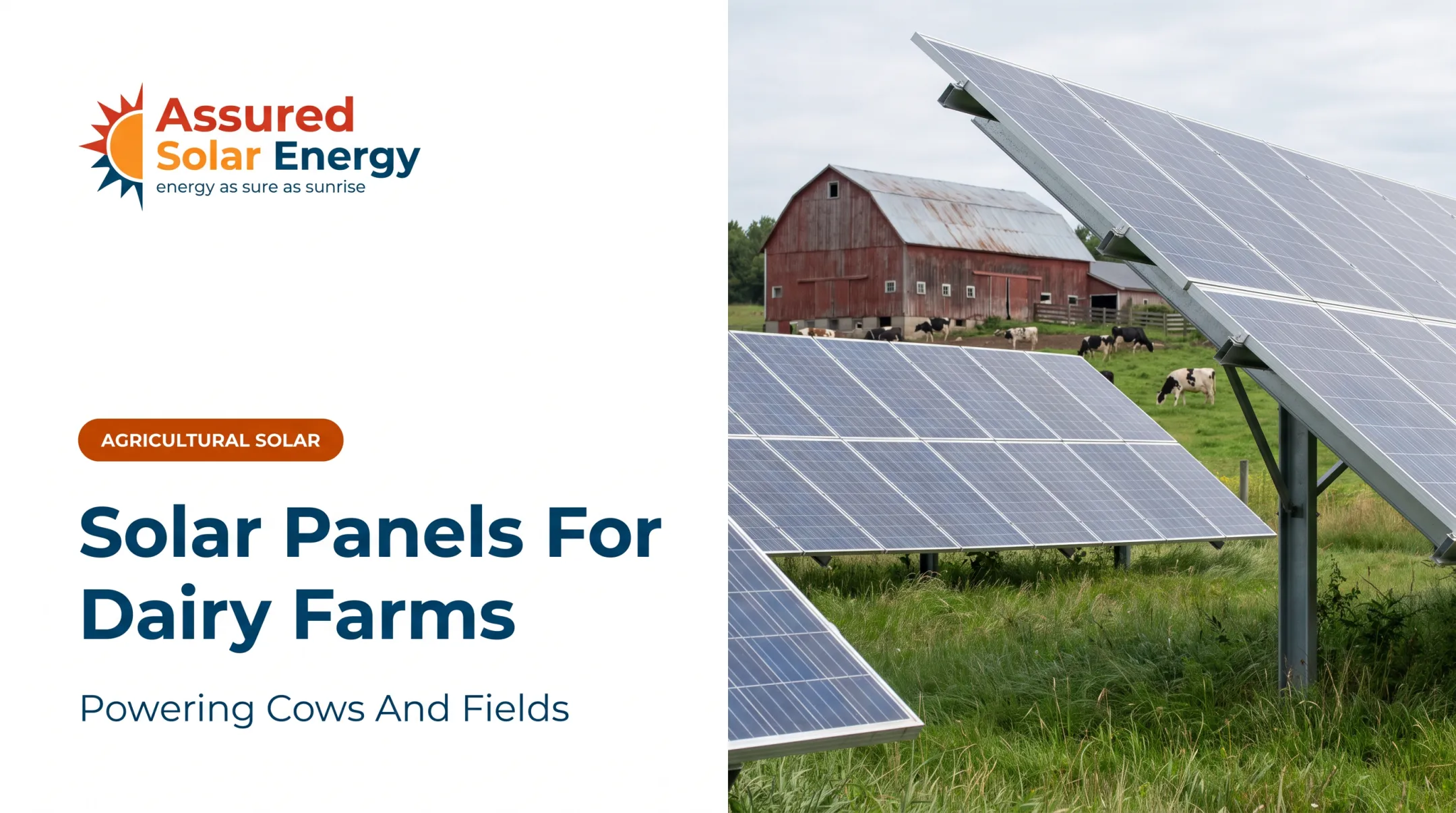
Barns, poultry housing, and equipment sheds are common rooftop candidates, while ground mounts suit farms with unused acreage and roofs that aren't a good structural fit.
Battery Storage and Off-Grid Systems
Standard grid-tied solar shuts off during an outage, by design, for safety. If you need power to keep running when the grid goes down, you need a battery system engineered for that purpose. Wisconsin's agricultural outage guidance flags these as the loads worth prioritizing:
- Ventilation and environmental controls for livestock
- Well and water pumps
- Refrigeration and milk handling equipment
- Feed systems and computer controls
Assured Solar's battery backup systems also reduce time-of-use charges and increase self-consumption, and they can be added to an existing solar installation. For remote buildings with no practical grid connection, an off-grid or hybrid system (sized around seasonal production and battery capacity, sometimes with generator backup) may be the only realistic path.
Assured Solar's off-grid installations use the same LIDAR-based design process and serve agricultural and remote sites across Midcoast and Southern Maine, including island properties in Casco Bay.
Agrivoltaics: A Different Category Entirely
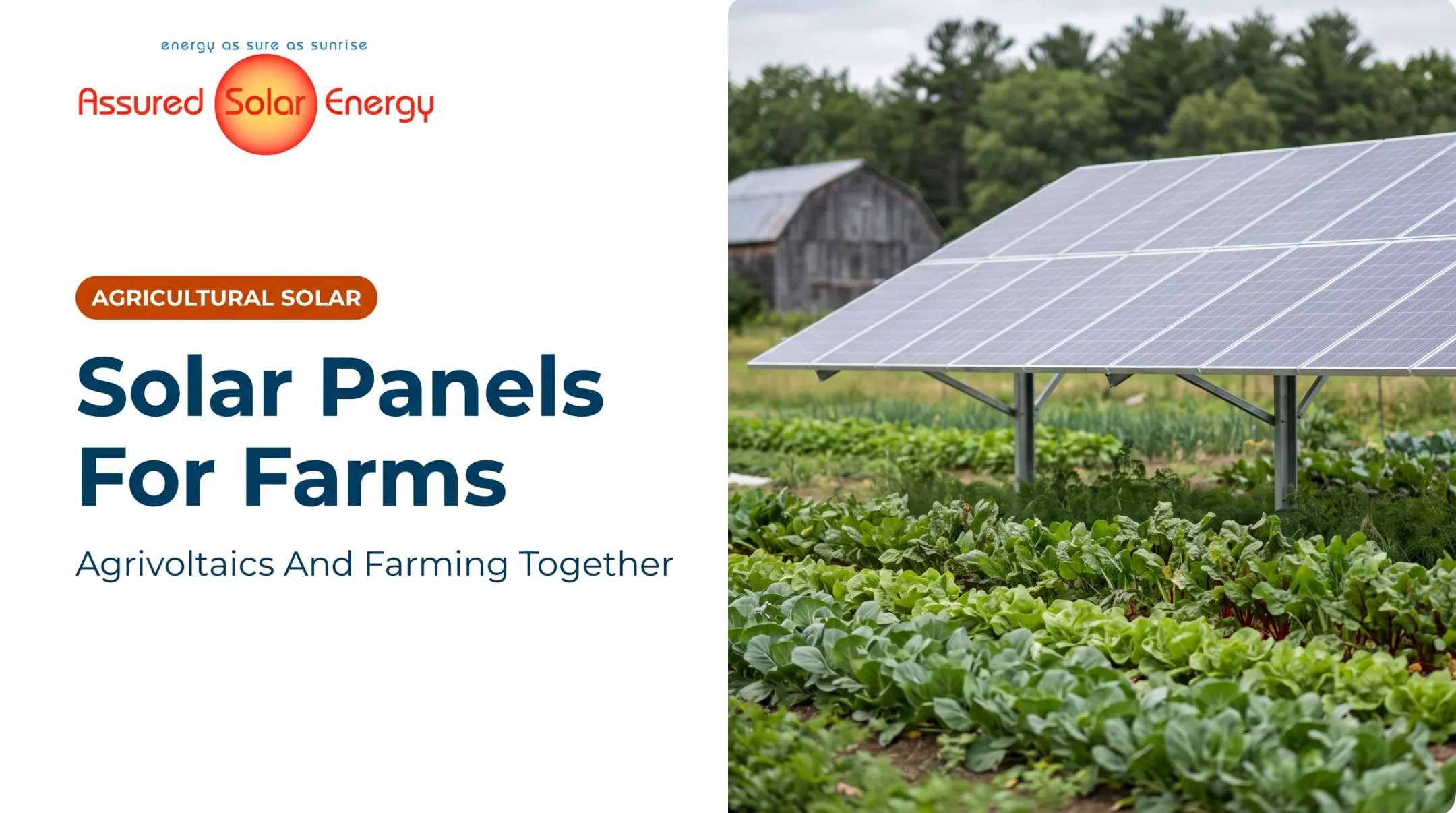
Agrivoltaics means panels installed over or near active crops, grazing land, or pollinator habitat, not on a barn roof. It requires planning around crop needs, livestock movement, equipment access, and drainage, and typically raises structural costs due to increased panel clearance and wider row spacing. Treat it as a separate decision from rooftop solar on existing buildings.
The Typical Project Process
- Assessment: review utility bills, load data, site conditions, and roof documentation
- Design: system design, production modeling, and structural/electrical engineering
- Approvals: permitting, utility interconnection applications, and incentive paperwork
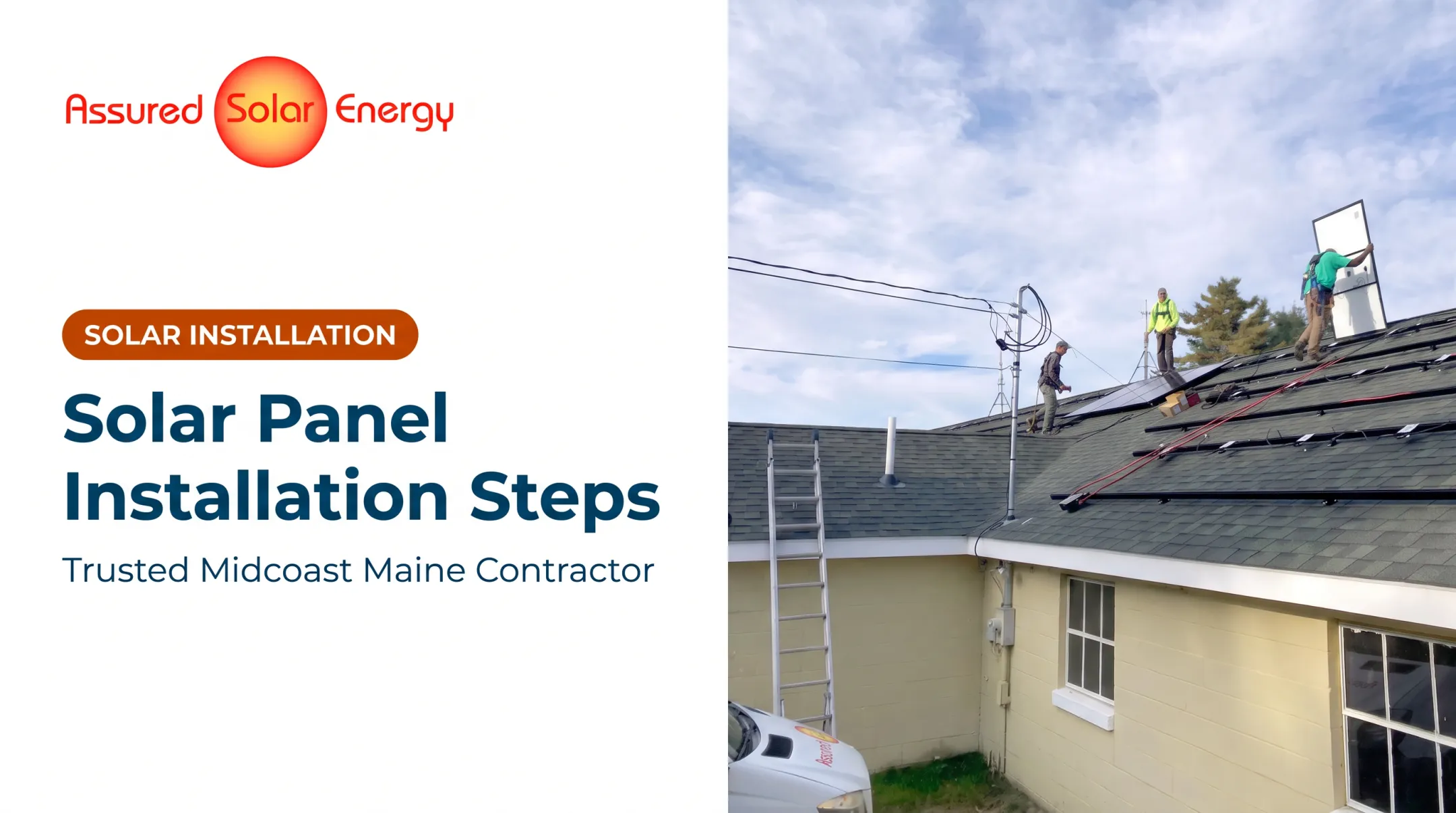
- Installation: equipment procurement, array installation, inspection, and commissioning

Assured Solar Energy handles this process end-to-end for commercial and agricultural clients, including compliance planning, though incentive eligibility and equipment specifics vary by project.
Challenges, Maintenance, and Agrivoltaic Considerations
Agricultural sites create operating conditions most residential systems don't face. Dust from tilling and harvesting, pollen, manure exposure, and restricted access for maintenance all affect long-term performance.
Soiling losses are real but variable. NREL's research on pollen buildup at utility-scale sites in North Carolina found performance dropping by as much as 15% during peak pollen season, with wet-brush cleaning restoring 5% to 11% of that loss.
Rain alone didn't fully resolve it. Base your maintenance schedule on your site's conditions, not a one-size-fits-all cleaning calendar.
Before you sign a contract, confirm:
- Manufacturer warranties cover equipment defects and power output; installer workmanship warranties cover the installation itself. These are different documents with different exclusions
- Inverter coverage varies: SolarEdge units typically carry 12 years (extendable to 25); newer Enphase microinverters often carry 25-year coverage
- Export compensation and interconnection rules are utility-specific, so don't assume your neighbor's deal applies to you
If you're considering agrivoltaics, the agricultural trade-offs are documented but crop-specific:
- University of Arizona trials found chiltepin fruit production tripled under panels
- An Oregon State grazing study found 38% less forage but similar lamb weight gains
Shade effects differ by crop and climate, so research your specific situation rather than assuming blanket benefits.
Frequently Asked Questions
What do farmers get paid for solar panels?
"Payment" can mean electricity-bill savings, utility credits for exported power, REC or SREC sales, or a land lease from a solar developer. These are distinct revenue streams with different eligibility rules, so clarify which one applies to your project.
Are solar panels worth it for agricultural buildings?
It depends on your electricity use, roof or site condition, available incentives, and financing terms. A project-specific financial analysis, not a general rule of thumb, is the only reliable way to know.
Can solar panels be installed on a barn roof?
Often yes, but it requires checking structural capacity, roof condition, shading, fire access, and electrical service first. Post-frame and steel-truss buildings typically need individual engineering review rather than a generic approval checklist.
What incentives are available for farm solar?
Federal tax credits, USDA REAP funding, state property tax exemptions, and depreciation benefits may all apply, but eligibility and deadlines change. Verify current rules through official sources and a qualified tax professional before budgeting around any specific number.
Should a farm choose rooftop or ground-mounted solar?
It comes down to available roof space and condition versus land availability and access needs. Farms with aging roofs or future expansion plans often lean toward ground mounts; those with strong existing roofs often prefer rooftop.
Can solar panels power farm equipment during a grid outage?
Standard grid-tied solar shuts down automatically during outages for safety reasons. A properly designed battery-backed, hybrid, or off-grid system can keep selected loads running, but only within the capacity you've actually built for.