
Today, solar energy shows up on office roofs, apartment buildings, dairy barns, school gyms, parking canopies, and off-grid cabins that never saw a utility pole. The technology hasn't just spread to more rooftops; it has moved into facades, carports, and even building materials themselves.
If you're weighing solar for a building you own, you probably have the same questions most people do:
- Is my roof, or lot, actually suitable?
- How much electricity will the system realistically produce?
- What will this cost, after incentives?
- Do I need batteries, or can I skip storage altogether?
This guide walks through how solar works in buildings, where it can be installed, what it costs, and how to tell if a property is a good candidate. We'll also cover the installation process from first phone call to final inspection, with real project examples from Maine installations along the way.
Key Takeaways
- Photovoltaic (PV) systems generate electricity; solar thermal systems heat water or fluids
- Roof condition, shading, orientation, structural capacity, and utility rules all determine whether a project makes sense
- Solar works on new construction and retrofits alike, from rooftops to carports to facades
- Batteries add backup power and flexibility but aren't mandatory for most grid-tied systems
- Costs and production vary too much by site for a single "average" price to mean much
What Is Solar Energy in Buildings and How Does It Work?
A photovoltaic (PV) system does one job: turn sunlight into electricity your building can use.
Solar cells generate direct-current (DC) electricity when sunlight hits them. An inverter then converts that DC power into alternating-current (AC) electricity, the kind your outlets, appliances, and HVAC system actually run on. From there, power flows through your building's existing electrical panel just like grid electricity would.
The Core Components
A typical system includes:
- PV modules: the panels themselves, mounted on racking
- Inverter(s): convert DC to usable AC power
- Electrical equipment: disconnects, wiring, breakers
- Monitoring: tracks daily and historical production
- Utility interconnection equipment: required for grid-tied systems
- Batteries (optional): store excess power for later use
One Assured Solar project, a 15.54 kW DC system using 42 REC Solar panels and a SolarEdge inverter, produces roughly 22,907 kWh per year, enough to cover about 95% of that household's annual electric use.
Grid-Tied, Hybrid, or Off-Grid
- Grid-tied: sends excess power to the utility grid and draws from it when solar isn't producing enough. Under UL 1741 safety rules, grid-tied inverters shut down automatically during a power outage.
- Hybrid: grid-tied with battery backup, so selected circuits stay powered during an outage.
- Off-grid: no utility connection at all. Common for camps, islands, and remote buildings where running utility lines isn't practical.
Three Technologies, Three Jobs
- Photovoltaic (PV) systems generate electricity for building loads: lighting, outlets, HVAC, EV charging
- Solar thermal systems heat water or fluid directly, often for domestic hot water
- Building-integrated photovoltaics (BIPV) replace conventional building materials, such as roofing, windows, or facades, with solar-generating versions
Before sizing any array, tighten up the building itself. Insulation upgrades, efficient lighting, and a right-sized HVAC system reduce the electrical load a solar system needs to cover, often shrinking the array size and cost needed to hit your goals.
Module efficiency and lifespan matter too, though figures vary by manufacturer and product line. Current data from the IEA PVPS report puts commercial monocrystalline-silicon module efficiency in the 20%-25% range. Most systems are built to last 25-35 years. Crystalline-silicon panels typically lose about 0.5%-0.6% of output each year, based on long-term degradation research.

Where Can Solar Be Integrated Into a Building?
Rooftop Solar, the Default Choice
Most systems still go on rooftops because it's usually the most cost-effective option. Performance depends on:
- Roof age and remaining lifespan (a 10-year-old roof may need replacement before solar goes on top)
- Orientation and pitch, with south-facing, moderate slopes typically performing best
- Shading from trees, chimneys, or neighboring structures
- Available square footage and access for maintenance
Building-Integrated Photovoltaics (BIPV)
BIPV products generate electricity while doubling as the building material itself: solar roofing shingles, facades, skylights, even windows and balustrades. It's still a specialty category; adoption remains low compared to standard rooftop PV, and products often carry a price premium.
If the look of integrated solar matters more than the lowest cost per watt, it's worth exploring. Otherwise, conventional rooftop PV usually wins on economics.
Ground Mounts, Carports, and Agricultural Structures
When roof space is limited, shaded, or structurally unsuitable, ground-mounted arrays, solar carports, and parking canopies fill the gap. Examples include:
- A Lockheed Martin facility in Orlando that turned a parking lot into a 2 MW solar carport
- A USDA research site in Hilo, Hawaii, that paired a 75 kW carport with a 96 kW agricultural pole-barn structure on a land-constrained property
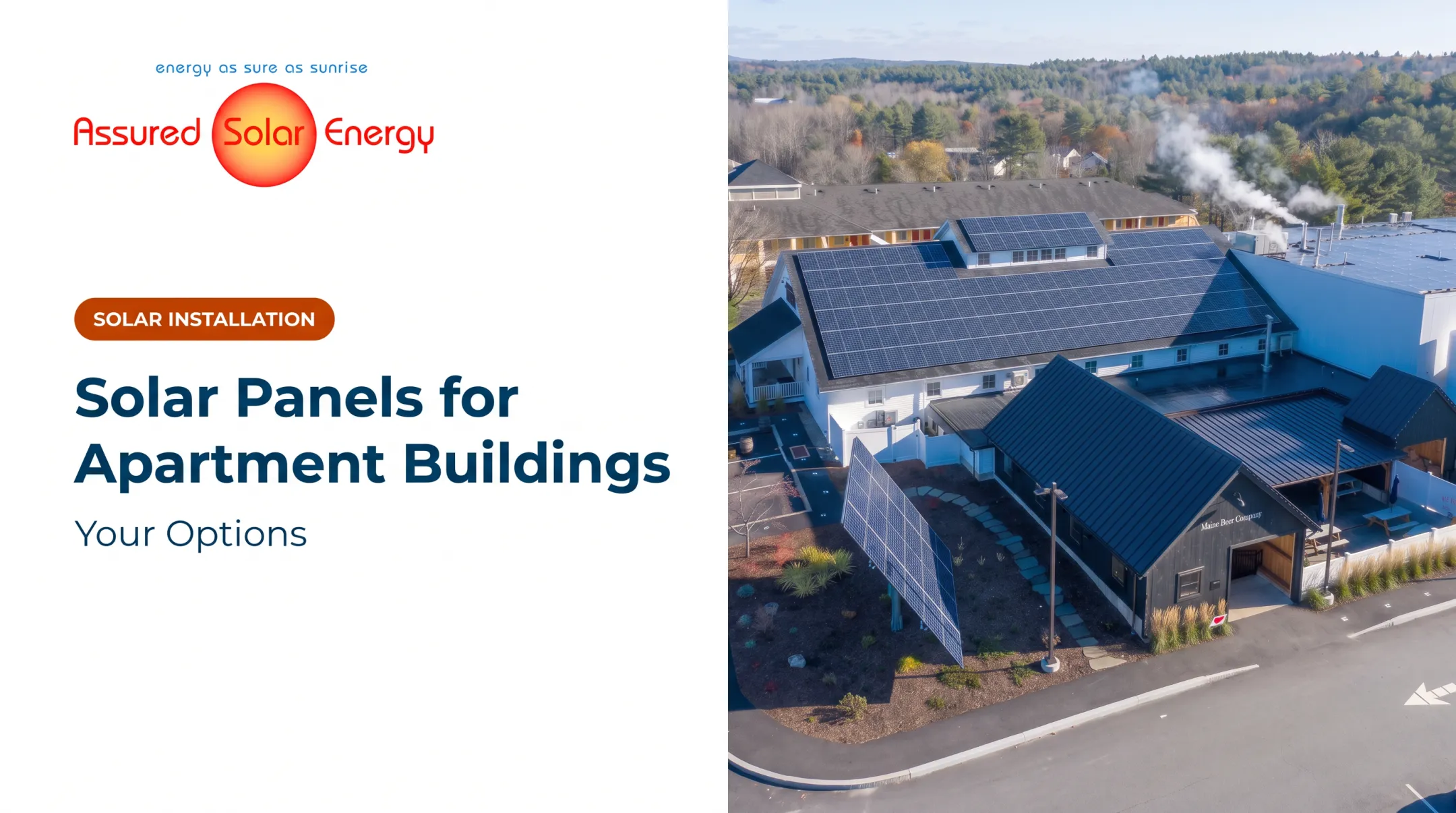
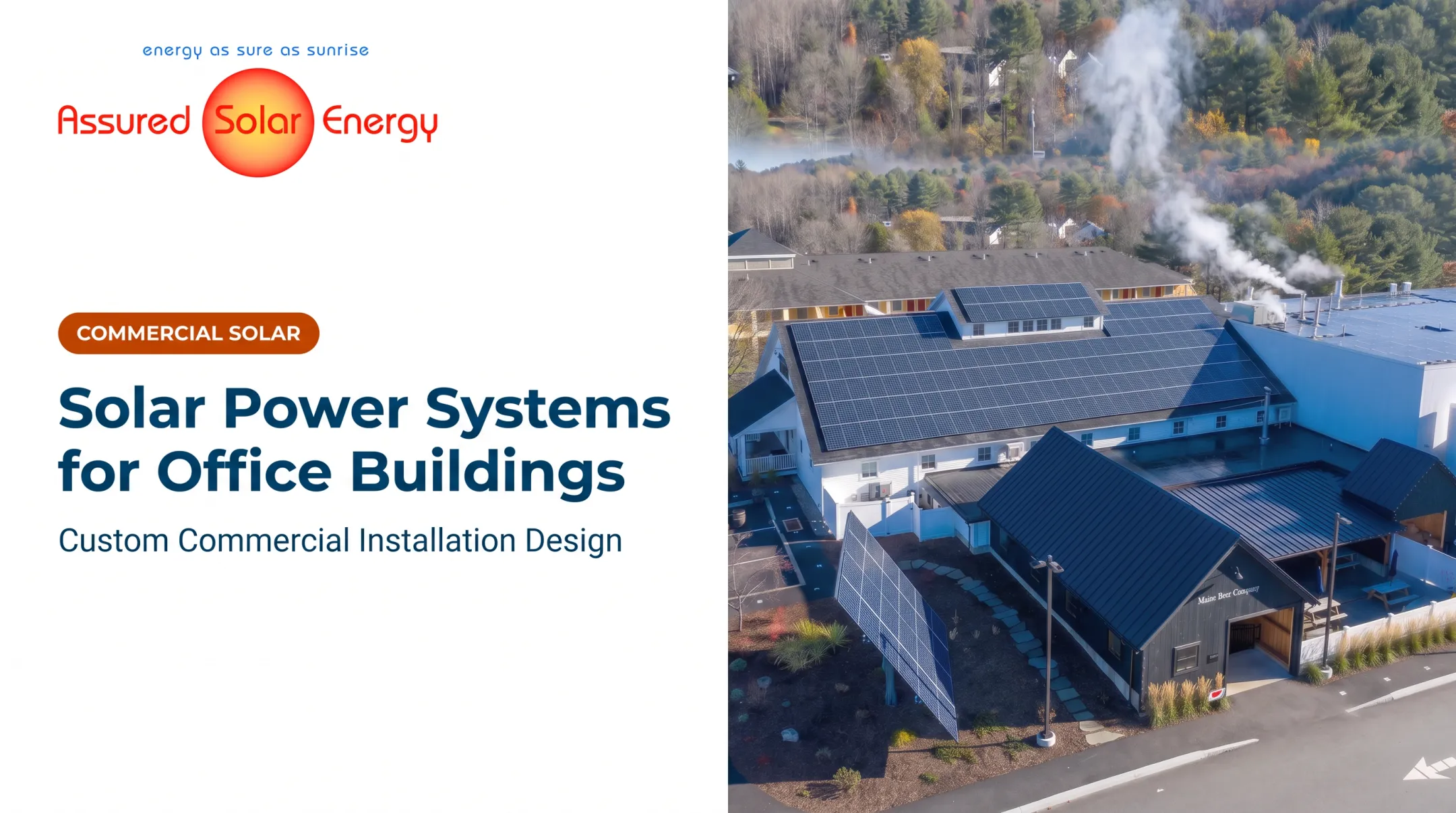
Closer to home, Maine Beer Company runs solar arrays across multiple rooftops plus a ground-mounted array beside its facility, showing that mixed approaches often make sense for larger properties.
Planning for New Construction
Adding solar during new construction, rather than retrofitting later, lets you coordinate structural framing, electrical routing, roof layout, battery space, and EV-charging conduit before drywall goes up. It's almost always cheaper to plan this in than to retrofit.
Matching the Site to the Building Type
- Homes: household loads, roof constraints, backup goals, and future electrification (heat pumps, EVs) shape system design
- Commercial and multifamily buildings: common-area loads, multiple meters, tenant arrangements, and available roof or parking space add complexity
- Farms, camps, and remote buildings: standalone operation, seasonal use, battery sizing, and backup generators often matter more than grid interconnection
A Cape Cod-style Maine home Assured Solar worked with needed a ground-mounted array rather than a roof mount. The 6.2 kW system left room to expand to 8 kW, enough to cover a household running both an electric car and an electric motorcycle.
What Are the Benefits and Limitations of Solar-Powered Buildings?
The Financial Case
Solar reduces the electricity you buy from the grid, which matters more every year. One modeled Assured Solar project projected $3,578 in first-year savings (92% of the electric bill) and $5,971 in average annual savings over 25 years, assuming rates keep climbing. Exact savings always depend on your utility rate structure, consumption, and export compensation; there's no universal payback number.
Beyond bill savings, research from Lawrence Berkeley National Laboratory and Fannie Mae found that solar installations can raise home value by roughly 3%-4%.
Resilience: What Solar Can, and Can't, Do During an Outage
Here's something many homeowners get wrong: a standard grid-tied system does not keep the lights on during a blackout. Under UL 1741 safety rules, grid-tied inverters shut down automatically when the grid goes down. It's a safety requirement, not a flaw.
Solar paired with properly configured battery storage is different. According to NREL's county-level study, a 2023 simulation found that a 10 kWh battery sized to cover 100% of annual load could fully meet limited critical loads during a three-day outage in 93% of U.S. counties studied. That figure excludes heating and cooling. Once those loads are added, coverage drops to about 86% of critical load served.

Environmental and Property Benefits
Solar displaces grid electricity, most of which still comes from fossil fuels in many regions. One documented Assured Solar project estimated 470 tons of CO2 avoided over the system's life, comparable to planting nearly 2,000 trees.
Maintenance Reality Check
- Monitoring portals should be checked periodically for production drops
- Panels may need occasional debris or snow clearing, depending on climate
- Inverters typically carry shorter warranties than panels and may need mid-life replacement
- Battery systems need their own maintenance and warranty review
The Honest Limitations
Production varies by season, weather, and shading, and it's never perfectly predictable. Roof replacement timing matters too; installing solar on a roof that needs replacing in five years is a costly mistake. Permitting and utility interconnection can add weeks or months to a timeline.
Solar alone doesn't make a building net-zero. Pairing it with efficiency upgrades, like insulation, better HVAC, and LED lighting, usually gets you further, faster, than solar generation by itself.
How Much Does It Cost to Build a Solar-Powered Building?
There's no single price tag for solar. Costs swing based on building size, electrical demand, system capacity, roof versus ground-mount design, equipment choice, labor, structural work, permitting, and site access.
That said, current national benchmarks offer a useful starting point. According to DOE's cost benchmarks, modeled 2025 pricing, before incentives, runs roughly:
| System Type | Modeled Cost (before incentives) |
|---|---|
| Residential rooftop PV | $2.78-$2.95 per watt DC |
| Commercial rooftop PV (250 kW) | $1.95-$1.98 per watt DC |
| Residential PV + battery (8 kW + 13.5 kWh) | $4.33-$4.59 per watt DC |
| Commercial PV + battery (250 kW + 250 kWh) | $2.96-$2.98 per watt DC |

A documented Assured Solar Energy residential project, 15.54 kW DC, carried a $38,850 contract price, dropping to a $28,749 net cost after a $10,101 federal tax credit.
What Drives the Price
- Equipment: modules, inverters, racking, wiring, disconnects, monitoring hardware
- Soft costs: engineering, site assessment, design, permitting, interconnection fees, project management
- Site-specific work: roof repairs, structural reinforcement, trenching, electrical service upgrades, batteries, backup-load controls
- Ongoing costs: inspections, maintenance, insurance, eventual component replacement
Incentives Change the Math, But Deadlines Matter
Federal incentives have shifted recently. The residential 30% tax credit (Section 25D) is no longer available for systems placed in service after December 31, 2025. Commercial projects may still qualify under Section 48E, with base and bonus rates depending on wage and apprenticeship compliance, project size, and placed-in-service dates.
State, utility, and local incentives vary widely and change often. Confirm current eligibility with a tax professional or your installer before assuming a specific credit applies.
Running the real numbers means factoring in your consumption, utility rate, expected production, financing terms, export compensation policy, and battery value, not just a flat price per watt. For commercial projects especially, this gets complicated fast.
Assured Solar Energy supports end-to-end commercial projects, covering design, engineering, permitting, procurement, installation, activation, and compliance documentation. That full-scope support matters when incentive paperwork and manufacturer documentation have to line up correctly.
How Do You Determine Whether a Building Is Suitable for Solar?
Start With a Feasibility Checklist
Before requesting quotes, gather:
- 6-12 months of utility bills or usage history
- Building type and ownership status
- Roof age, condition, and remaining lifespan
- Shading from trees or nearby structures
- Roof orientation, pitch, and usable area
- Electrical service capacity and structural load capacity
- Energy goals, such as bill reduction, backup power, or electrification
What a Professional Site Assessment Should Include
A real assessment goes beyond a satellite photo. It should cover:
- Production modeling using tools like PVWatts, Aurora, or HelioScope to estimate realistic annual output
- Electrical review of your service panel, wiring, and connection point capacity
- Structural review confirming the roof or mount can handle the array, snow loads, and wind
- Utility interconnection requirements, since agreements and metering rules vary by provider
- Future load planning, accounting for heat pumps, EV chargers, or planned additions
Assured Solar uses LIDAR-based system design to map roof geometry, shading, and usable area precisely, a step that reduces surprises once installation starts.

Comparing Proposals: Price Isn't Everything
When reviewing quotes from different installers, look past the bottom-line number:
- Estimated production and how it was modeled
- Equipment and workmanship warranty terms
- Monitoring and ongoing maintenance support
- What's explicitly excluded from the scope
- Project timeline and installer's track record
A 30-year equipment and labor warranty, for instance, tells you more about long-term reliability than a slightly lower upfront quote.
Matching Design to Site Conditions
Suitability varies by building and use case. Assured Solar works across residential, commercial, agricultural, grid-tied, off-grid, battery-backup, EV-charging, island, and remote-site projects. Each brings different structural, electrical, and resilience requirements.
A camp on an unbridged Maine island needs a different design conversation than a commercial rooftop in Portland, Maine. Both still start with the same basic question: does this site make sense for solar?
What Is the Process for Adding Solar to a Building?
The Typical Sequence
- Define your goals: cost reduction, backup power, electrification, or energy independence
- Review utility data: 6-12 months of bills establish your baseline usage
- Assess the site: roof or ground conditions, shading, structural and electrical capacity
- Develop a preliminary design using production modeling software
- Confirm structural and electrical requirements, including any upgrades needed
- Review the proposal: equipment, pricing, warranties, timeline
- Apply for permits and utility interconnection, required before installation in most areas
- Procure equipment and install, typically completed in days once permits clear
- Inspect and activate through local inspection, then utility approval
- Monitor ongoing performance through a monitoring portal

Assured Solar Energy compresses this into four stages: initial contact, customized design with LIDAR and modeling software, approval and scheduling, and professional installation.
New Construction vs. Retrofitting
Building solar into new construction means coordinating with architects, builders, roofers, and electricians from the design phase. Wiring, roof layout, and battery space get planned in before anything is built.
Retrofitting an existing building means working around what's already there: roof condition, panel capacity, and sometimes aesthetic constraints.
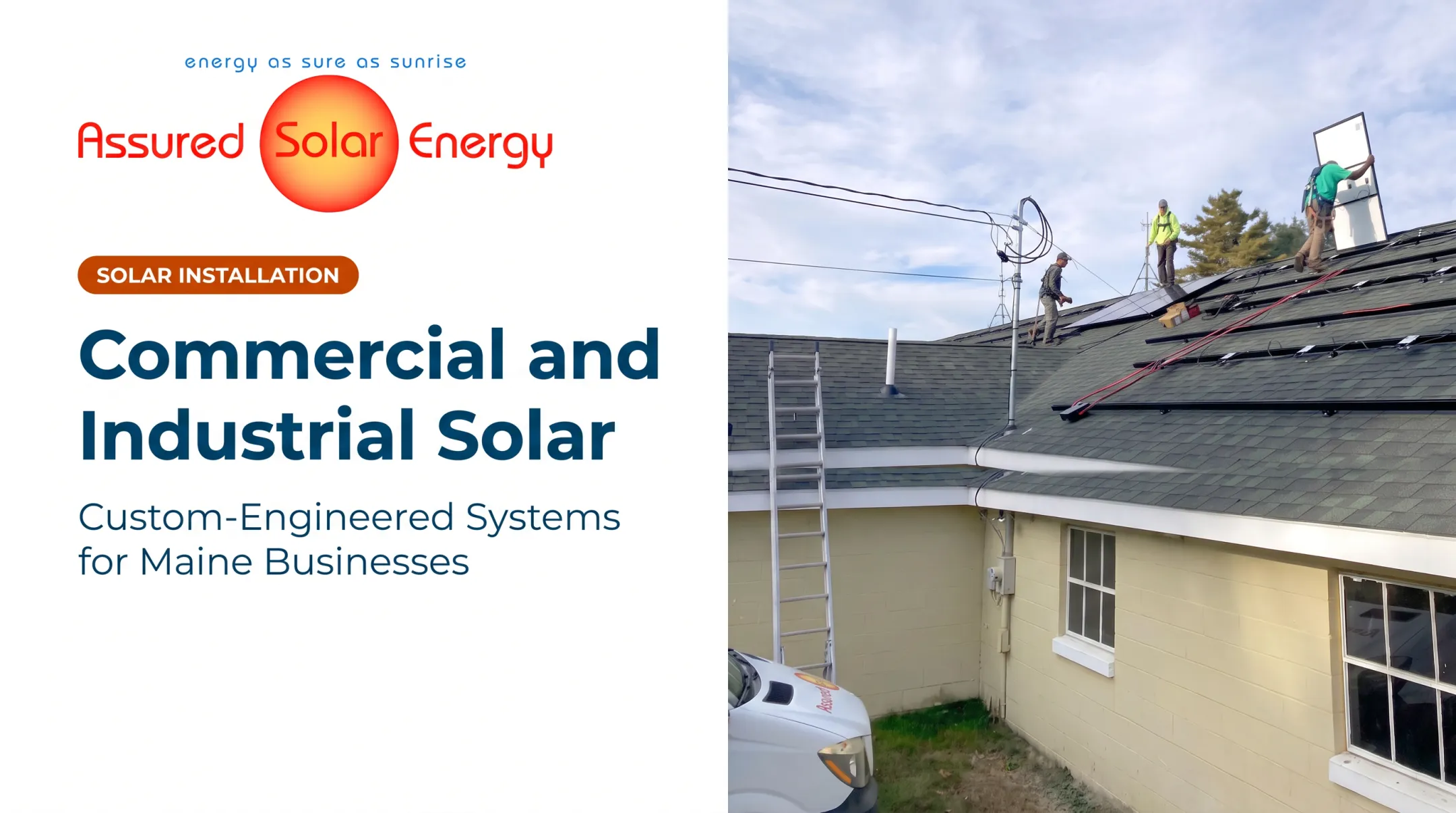
In one Assured Solar Energy case study, the crew staged equipment and finished installation within a few days once permits cleared. The slowest part of most projects is permitting and interconnection, not the physical install.
Questions to Ask Before Signing
- Who handles permits and utility interconnection paperwork?
- What specific equipment is included, and what are the warranty terms?
- How was production estimated, and what software was used?
- If batteries are included, how do they operate during normal use and outages?
- Who provides support after installation, and for how long?
Set a Baseline, Then Set Goals
Document your building's current energy use before installation. Then set measurable targets: a set bill reduction, backup for specific circuits, lower emissions, or support for an EV and heat pump transition.
Clear goals make it much easier to judge whether a proposal actually solves your problem.
Frequently Asked Questions
How much does it cost to build a solar-powered building?
Cost depends on building size, energy demand, system type, roof or site conditions, storage needs, electrical upgrades, labor, permitting, and available incentives. There's no universal price; a site-specific assessment is the only way to get an accurate number.
How does solar energy work in a building?
Solar panels generate DC electricity, which an inverter converts to AC power your building can use. Depending on the system, excess electricity gets exported to the grid, stored in batteries, or both.
Can solar panels be installed on an existing building?
Yes. Rooftop, ground-mounted, carport, canopy, facade, and BIPV options all work on existing buildings. Roof condition, shading, structural capacity, electrical service, and local permits all need review first.
Do buildings need batteries with solar panels?
No, batteries are optional for most grid-tied systems. They become valuable for outage backup, remote properties without grid access, shifting solar use to peak hours, or reducing grid reliance.
Will solar panels power a building during a power outage?
Standard grid-tied systems shut down during outages for safety, per UL 1741 requirements. Systems designed with compatible batteries and backup controls can keep selected circuits running.
How much solar power does a building need?
System size depends on electricity consumption, available roof or site area, local solar resource, shading, utility rules, budget, storage goals, and how much of your usage you want solar to offset.